

Black and White Headshots A Complete Guide
Discover the power of black and white headshots. This guide covers lighting, composition, and editing to help you create a timeless professional portrait.
Table of Contents
There's something undeniably classic about a black and white headshot. It's a choice that feels sophisticated and deliberate, stripping away the distraction of color to put the focus squarely on you—your character, your expression, your story. By playing with just light and shadow, these images can highlight emotion in a way that color sometimes can't, making them a powerful tool for any professional wanting a truly impactful look.
Why Black and White Headshots Feel So Powerful
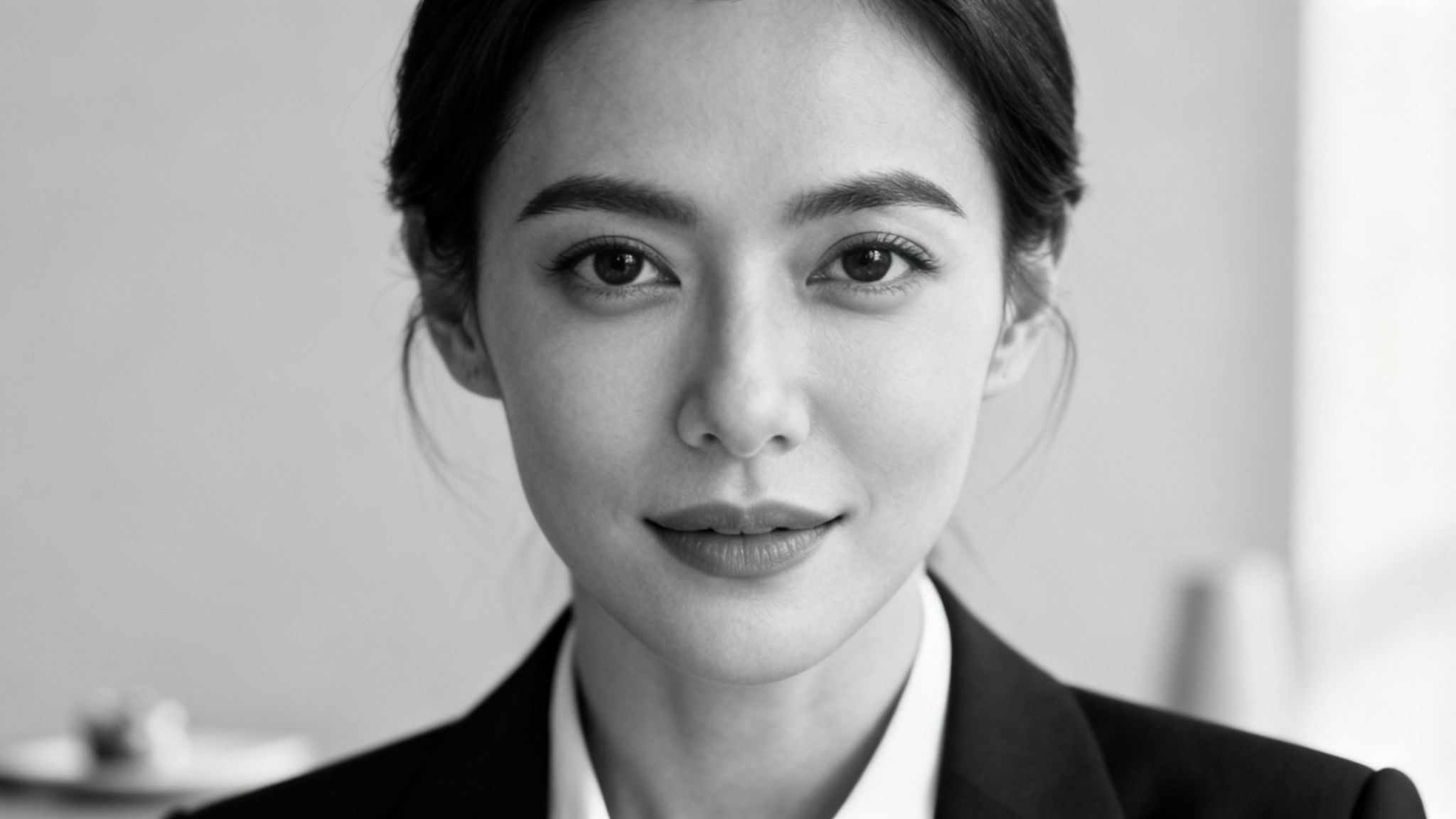
In a world filled with high-saturation, vibrant images, how does a simple black and white portrait still manage to stop us in our tracks? The magic is in its simplicity. By taking color out of the equation, these photos force our eyes to zoom in on what really matters: texture, expression, and the raw emotion of the person in the frame.
Here’s an analogy: a color photograph is like a full orchestra, with every instrument adding layers of information. A black and white photo, on the other hand, is like a stunning solo piano performance. It’s pure, direct, and gets right to the heart of the subject without any fuss. Choosing monochrome isn't just about applying a filter; it's a powerful storytelling decision.
The Power of Subtraction
When you remove color, everything else becomes more important. Without different hues to catch the eye, the photographer has to be a master of light, shadow, and composition. This is why the best black and white portraits feel so intentional and artful. This tradition has deep roots, after all—photography started as a purely monochrome medium back in the 1820s, with the earliest techniques only able to capture the interplay of light and dark.
A great black and white image dials up the focus on these key elements:
- Emotion and Expression: The smallest flickers of emotion—micro-expressions and subtle shifts in mood—suddenly become the main event.
- Shape and Form: Shadows and highlights sculpt the contours of a face, giving it an almost three-dimensional, statuesque quality.
- Timeless Quality: The image instantly feels classic. It won't look dated in a few years just because of shifting color trends in fashion or photography.
A monochrome headshot is a statement. It communicates confidence and a focus on substance over style, making it an excellent choice for professionals who want to be taken seriously.
At the end of the day, any good portrait is about connection. By clearing away the noise of color, a black and white headshot forges a more direct and intimate link between the subject and the viewer. Getting a feel for these core ideas is the first step in understanding what makes a good headshot truly stand out from the crowd.
When to Choose a Monochrome Headshot
Picking between a color or black and white headshot isn't just about what looks good—it's a deliberate branding move. A monochrome photo cuts through the noise, stripping away distractions and pulling the viewer's focus directly to your expression and personality. This simplicity speaks volumes, often conveying a sense of seriousness, sophistication, and timeless authority.
While color is the default for most, choosing a black and white portrait can make you unforgettable. It's a bold move for professionals who want their brand to feel classic and substantive. Think of it like a perfectly tailored suit; it’s a statement that signals confidence and a focus on what truly matters.
Who Benefits Most from Black and White
Some professions just click with the powerful, focused message a monochrome headshot sends. If your personal brand is built on expertise, depth, or artistic integrity, a black and white portrait can be one of your best tools.
These professionals often find it works exceptionally well:
- Authors, Academics, and Journalists: For people whose work is all about words and ideas, a monochrome photo highlights intellectual depth and credibility.
- Lawyers and Executives: In fields where authority and trust are everything, the classic, no-nonsense tone of a black and white image can build instant confidence.
- Artists, Musicians, and Designers: Creatives can use monochrome to express a unique artistic vision and a sophisticated style that helps them stand out.
A great black and white headshot doesn't just show what you look like; it tells the world how you want to be seen. It’s a tool for shaping your professional story before you even say a word.
This isn't just about a feeling; it's about making a strategic choice to stand apart. While only about 5–10% of professional headshots are intentionally black and white, that number climbs to 20–30% among top creative and business leaders. This shows just how powerful it is for anyone aiming to project authenticity and gravitas.
Practical Advantages for Your Online Presence
Beyond brand messaging, black and white headshots have some real functional perks. On a crowded platform like a LinkedIn feed, a striking monochrome image can immediately stop the scroll simply because it looks different. Its high-contrast nature also tends to look sharper and more defined on all kinds of screens, from a big desktop monitor to a tiny phone.
That consistency is a huge plus. A black and white photo holds its own visually across different social media platforms, printed materials, and press releases. You never have to worry about weird color shifts or your picture clashing with a company's website design. For anyone serious about building a strong brand, digging into what makes for the best LinkedIn profile pictures can offer even more great ideas.
Ultimately, choosing monochrome is a decision to prioritize clarity, impact, and a timeless feel for your professional identity.
How Light and Shadow Create a Classic Look
When you strip away color, what’s left? Just light and shadow. In black and white photography, that’s everything. Light becomes the main character, the storyteller. It’s what separates a flat, uninspired picture from a portrait with real depth and emotion.
Think of light as a sculptor’s tool. It carves out the shape of a face, defines features, and sets the entire mood. Soft, gentle light can feel open and honest, while a hard, direct light source creates stark shadows that scream drama and confidence. The direction, quality, and intensity of your light are the only tools you need to craft a truly timeless black and white headshot.
The Art of Sculpting with Light
You don't need a fancy studio to get this right. In fact, many of the most iconic portraits were created with a single light source—sometimes just a window. The secret isn't having more gear; it's knowing how to use the light you have.
Let's look at two classic, foundational lighting styles that prove this point.
- Rembrandt Lighting: This one is all about drama and character. It gets its name from the painter, and for good reason. By placing a light at roughly a 45-degree angle to your subject, you create a beautiful, defining shadow on one side of the face. The trademark is a little triangle of light that appears on the shadowed cheek, which adds an incredible sense of dimension.
- Butterfly Lighting: This is your classic Hollywood glamour light, sometimes called "paramount" lighting. The light source is placed high and directly in front of the subject. This creates a small, butterfly-shaped shadow just beneath the nose. It’s an incredibly flattering technique that highlights cheekbones and smooths out the skin.
This image is a perfect example of Rembrandt lighting in action. Notice how that single light source creates a distinct triangle of light under the eye, using deep shadows to literally sculpt the face.
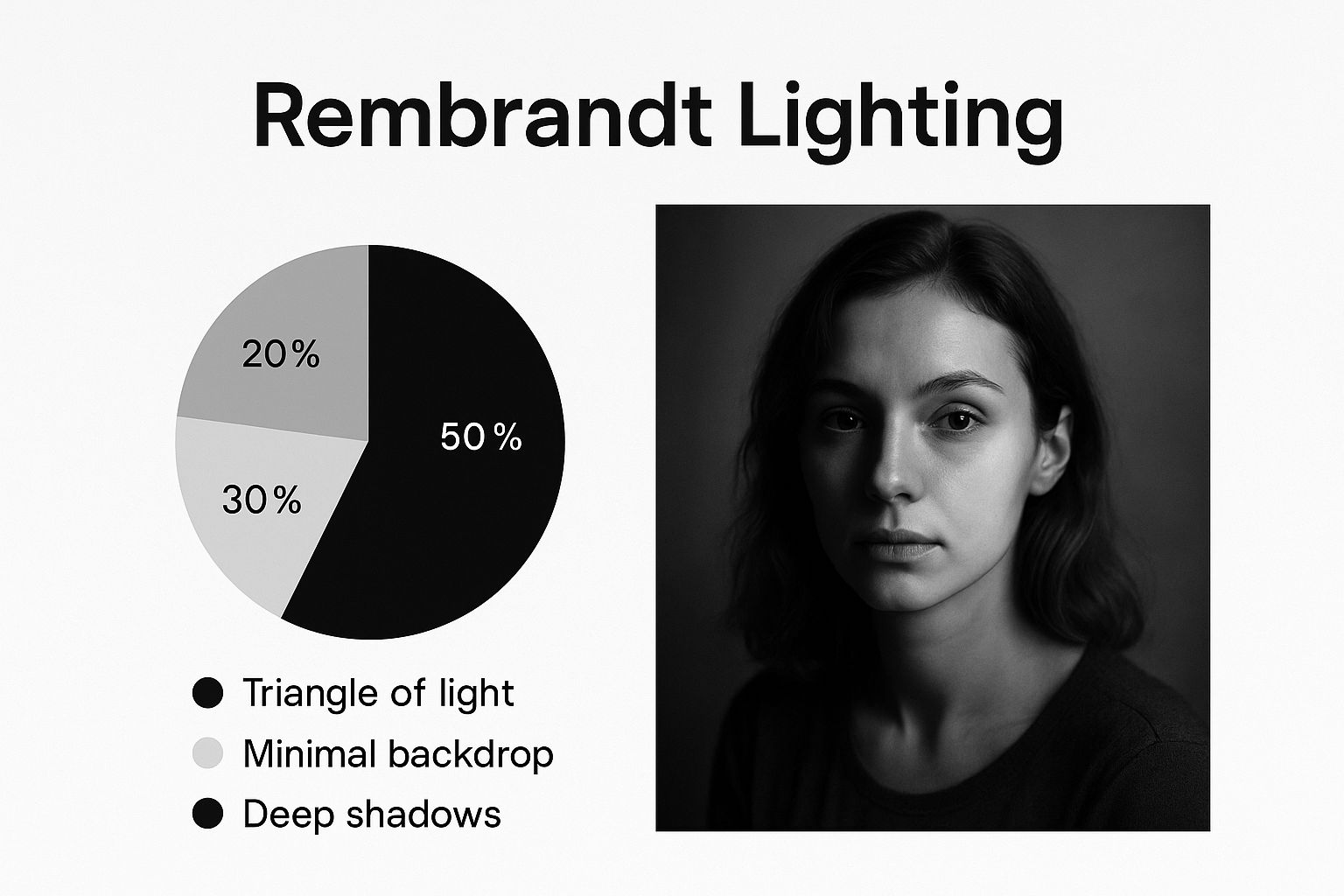
What this really shows is that the precise angling of light matters far more than just how bright it is. You're defining shape and conveying a powerful mood with a surprisingly simple setup.
Practical Tips for Any Light Source
You can start playing with these ideas right now, whether you're using a professional strobe or just the lamp in your living room. The goal is always the same: control the light to tell the story you want your headshot to tell. It all comes back to the fundamentals.
The most compelling black and white headshots are born from intentional lighting choices. The goal is to create tonal contrast—a rich range of blacks, whites, and grays—that makes the image pop off the screen.
And this is just scratching the surface of what’s possible when you truly start seeing light as an artistic tool. For anyone ready to go deeper, exploring different headshot lighting setups will open up a whole new world of creative options. Once you master these basic techniques, you're in complete control of the final image. Your headshots won't just be seen; they'll be felt.
Composing Your Shot for Maximum Impact
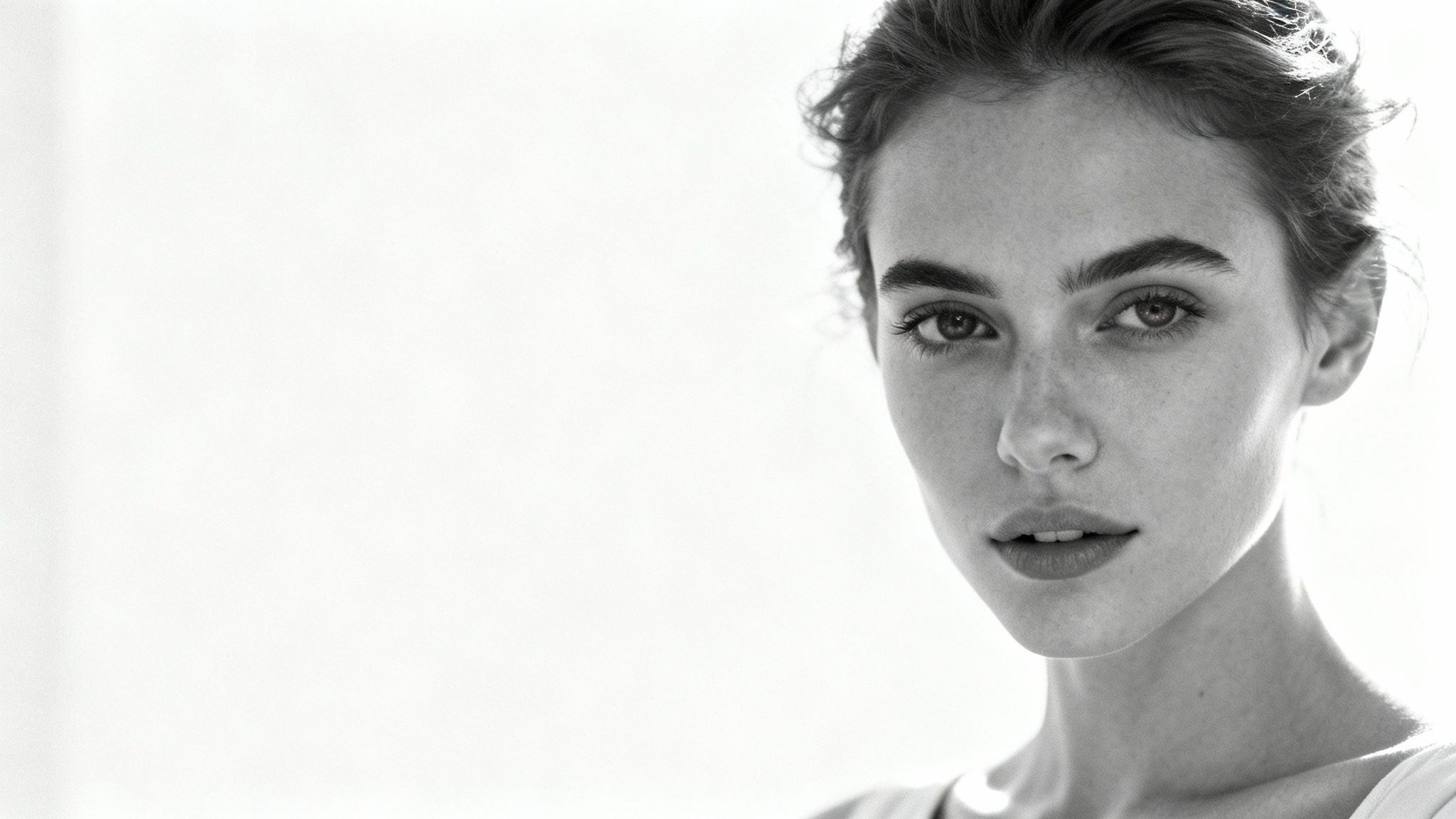
When you take away color, everything else has to work harder. In black and white headshots, your composition does the heavy lifting. Every line, shape, and patch of empty space suddenly carries more weight, working together to guide the viewer’s eye and tell a story.
Think of it this way: if lighting is the sculptor carving the stone, composition is the pedestal that presents the final piece. A weak composition can make even a perfectly lit portrait fall flat. The good news is that you don't need a formal art education to nail it. The core ideas are all about intentionally directing attention.
Mastering the Rule of Thirds
One of the oldest tricks in the book is still one of the best: the rule of thirds. Just imagine your camera’s frame has a tic-tac-toe grid laid over it. The idea is to place the most important parts of your image—like your eyes—along those lines or at the points where they intersect, rather than smack in the middle.
Placing an eye right on one of those intersection points creates a natural sense of balance and flow. It’s a simple shift that makes a photo feel more dynamic and professional. This one technique alone can instantly elevate your shot from a quick snap to a considered portrait.
Using Negative Space to Your Advantage
Negative space is just a fancy term for the empty areas around you in a photo. In black and white, this space isn't just "empty"—it's an active ingredient in your composition. A lot of negative space can make a portrait feel calm, open, and elegant. On the other hand, filling the frame right up to the edges creates a feeling of intensity and intimacy.
The trick is to be deliberate. What feeling are you going for?
- Want a confident, powerful vibe? Go for a tighter crop that fills the frame and leaves very little negative space.
- Aiming for an approachable, thoughtful mood? Pull back a bit and give yourself some breathing room in the shot.
Compositional choices directly influence the emotional tone of your portrait. A tight crop feels intense and direct, while a wider frame can feel more open and relaxed. Every decision sends a message.
Of course, how you frame the shot goes hand-in-hand with how you pose. Getting comfortable with a few key stances is crucial, and our guide on effective business headshot poses is a great place to find inspiration that works with any composition.
Compositional Styles and Their Emotional Impact
To help you decide, here’s a quick breakdown of how different compositional choices can shape the feeling of your final headshot.
| Compositional Style | Description | Best For Conveying |
|---|---|---|
| Tight Crop | The face fills most of the frame with very little background visible. | Intensity, confidence, and directness. |
| Rule of Thirds | The subject is placed off-center, along the gridlines. | Balance, professionalism, and visual interest. |
| Centered Framing | The subject is placed directly in the middle of the frame. | Formality, stability, and a bold, symmetrical look. |
| Wide Shot | Includes more of the upper body and background. | Openness, approachability, and environmental context. |
Ultimately, choosing the right style depends entirely on the message you want to send. Each one offers a different way to connect with the person looking at your photo.
Editing for a Timeless Black and White Finish
A truly breathtaking black and white headshot is never an accident. While you lay the groundwork during the photoshoot, the real magic happens in post-production. This is where you take the raw image and carefully shape it into a timeless piece of art. It’s so much more than just slapping on a black and white filter; it’s a delicate process of refining light, shadow, and texture.
The first—and most crucial—step starts before you even open your editing software: always shoot in RAW format. Think of a RAW file as a digital negative. It holds every bit of uncompressed data your camera sensor captured, giving you the ultimate flexibility to make precise adjustments without sacrificing image quality.
Mastering the Core Adjustments
With your RAW file ready, the real work begins. Your first instinct might be to hit a generic "black and white" button, but you'll get far better results by converting the image manually and fine-tuning the key elements. That level of control is what separates a flat, muddy-gray photo from a powerful, professional portrait.
The most important tools in your arsenal are:
- Contrast: This is the heart and soul of a great monochrome image. Pushing the contrast makes your whites brighter and your blacks darker, which creates that punchy, dramatic feeling that makes a portrait leap off the screen.
- Clarity and Texture: These are your secret weapons for making details pop. Clarity adds definition to the mid-tones, sharpening key features like the eyes or jawline. Texture, on the other hand, brings out the super-fine details in skin and hair without making the photo look crunchy or over-edited.
- Tone Curve: This is an incredibly powerful tool that gives you pinpoint control over the entire tonal range of your image. By creating a gentle "S-curve," you can deepen the shadows and lift the highlights, adding a rich, almost cinematic depth to the headshot.
The goal of editing isn't to change what the camera saw, but to emphasize the emotion and character that were already there. Each adjustment should serve the story of the portrait.
If you're looking to really get a handle on adjusting tones, our complete guide on professional color correction for photos covers foundational techniques that translate perfectly to black and white work.
Sculpting with Light Digitally
The final, artistic touches often come from a classic technique called dodging and burning. It’s an old-school darkroom method that’s become a digital staple, and it allows you to selectively lighten (dodge) and darken (burn) specific parts of the photo. Essentially, you’re painting with light.
You can use it to:
- Subtly brighten the eyes to draw the viewer in.
- Add dimension to the face by gently darkening the areas under the cheekbones.
- Guide the viewer's focus by toning down any distracting elements in the background.
By making these small, careful changes, you can sculpt the face and add a three-dimensional quality that makes the portrait feel truly alive. The key here is subtlety. The best edits are the ones you feel more than you see.
Once you've achieved that perfect finish, you'll want to make sure your masterpiece looks sharp everywhere. It's often necessary to optimize image file size without losing quality, especially for web portfolios or when sending files to clients.
Answering Your Questions About Black and White Headshots
Even after diving into the art of monochrome portraits, a few practical questions always pop up. Deciding to go with a black and white image for your professional brand is a significant choice, so it's completely normal to have some final thoughts.
Let's clear up some of the most common queries. Think of this as a quick chat to iron out any last-minute uncertainties you might have.
Are Black and White Headshots a Good Idea for LinkedIn?
Yes, absolutely. In fact, they can be a brilliant move for your LinkedIn profile. Imagine scrolling through a sea of standard-issue color photos—a striking black and white headshot immediately stops the scroll. It cuts through the noise.
A monochrome photo signals a certain seriousness and artistic flair. This works especially well for professionals in fields like law, finance, architecture, or the creative arts, where you want to project a sense of timeless authority. The trick is to make sure the lighting is on point, creating enough contrast so your expression pops, even when viewed as a tiny thumbnail on a phone.
A great B&W headshot on LinkedIn doesn’t just show what you look like. It makes a statement about your personal brand before anyone even reads your bio. It’s a deliberate choice to look both classic and distinct.
What Colors Should I Wear for a Black and White Photoshoot?
This one sounds like a trick question, right? But the colors you wear are actually critical—just not for the reason you'd think. Forget about specific hues like "blue" or "red." Instead, you need to think about tonal value: how light or dark a color will look once it's converted to grayscale.
Solid colors are almost always a safer bet than busy patterns, which can turn into a distracting mess without color to define them. Here are a few simple tips to get it right:
- Rich, deep tones are your friend. Think navy, burgundy, or forest green. These convert into gorgeous, complex grays that create a nice separation from your skin.
- Medium grays and earthy tones give off a soft, approachable vibe that looks flattering on just about everyone.
- Solid black or white can be incredibly powerful, but they require careful lighting. An all-black outfit can easily lose its texture and detail in the shadows, while pure white risks looking blown out or overly bright.
Your main goal is to pick a color with a tone that makes you stand out from the background, carving out a clean, defined silhouette.
Can't I Just Turn My Color Photo into Black and White?
You can, but you probably shouldn't. While any editing app can strip the color out of an image with a single click, this rarely creates a truly compelling headshot. The best black and white headshots are planned from the very beginning.
When a photographer is shooting for monochrome, they light you completely differently. It’s all about creating shape, depth, and drama with highlights and shadows, because that's all the final image has to work with.
A photo shot for color often uses different hues to create interest and separate you from the background. When you just remove that color data, the image often falls flat, looking dull and uninspired. For a result with real impact, the portrait needs to be intentionally crafted for black and white right from the start.
Ready to get that timeless, professional look without the cost and hassle of a studio session? YourAIPhotographer can generate stunning, studio-quality black and white headshots for you in minutes. Just upload a few casual selfies, and our AI will create the perfect portrait that captures your confidence and character. Get your professional AI headshots today.