

Winning Auditions with Headshots for Commercials
Discover how to get headshots for commercials that casting directors love. Our guide covers wardrobe, expressions, and tips to help you book your next role.
Table of Contents
When it comes to headshots, the commercial world plays by a different set of rules than the theatrical one. The number one goal? To come across as authentic, approachable, and trustworthy.
Think of it this way: your commercial headshot should make you look like a dependable friend or a helpful expert, not an intense, brooding artist. It's all about connecting with the casting director's mindset and showing them you can help sell a product.
What Casting Directors Actually Want to See
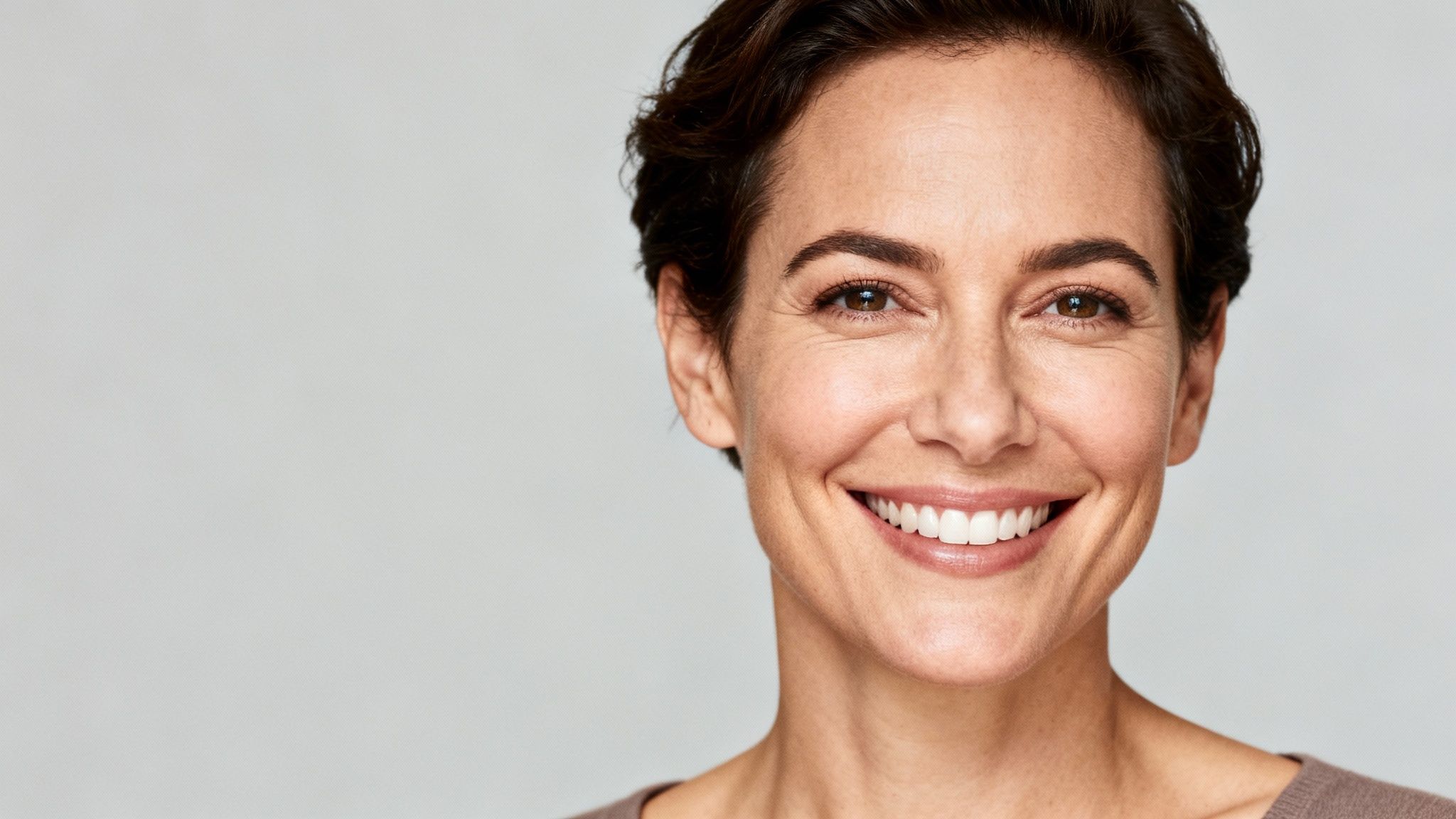
Imagine a casting director sifting through hundreds of tiny thumbnails. They spend just a few seconds on each face. In that split second, your headshot has to scream your brand, your personality, and the types of roles you'd nail.
The big secret? For commercials, likability almost always trumps dramatic range. Brands need actors who make them look good—faces that audiences instantly trust and connect with. So, ditch the smoldering, serious poses. Commercials are sold with warmth and relatability.
The Power of an Authentic Expression
Your most valuable tool for a commercial headshot is a genuine, warm smile. It instantly communicates friendliness, trustworthiness, and positivity, which are the cornerstones of most advertising campaigns.
The aim is to look like a real person someone would take advice from, whether you’re talking about a new car, a breakfast cereal, or a prescription medication. Authenticity is everything here. A forced, cheesy grin is easy to spot and can get your photo tossed aside immediately. Your expression needs to feel natural and effortless, like a snapshot of a genuinely happy moment.
Commercial vs. Theatrical Headshots
Knowing the difference between these two types of headshots is absolutely critical. They're both professional portraits, but their goals couldn't be more different. Submitting the wrong photo for a role is a rookie mistake you don't want to make.
If you want to dive deeper, our guide on creating impactful https://youraiphotographer.com/headshots/actor is a great resource.
But for now, here’s a quick reference guide to keep the two straight.
Commercial vs Theatrical Headshot Differences
| Attribute | Commercial Headshot | Theatrical Headshot |
|---|---|---|
| Primary Goal | To be likable and sell a product | To show dramatic range and character depth |
| Expression | Warm, friendly, approachable, smiling | Serious, thoughtful, intense, nuanced |
| Lighting | Bright, even, and energetic | Can be more dramatic, with shadows |
| Wardrobe | Casual, relatable, brand-friendly colors | Character-specific or neutral tones |
| Overall Vibe | "Trusted friend" or "helpful expert" | "Complex character" or "leading role" |
Understanding these distinctions will put you way ahead of the game.
Your commercial headshot isn't just a picture; it's a strategic marketing tool. It’s the visual component of your professional image, and grasping how to promote your personal brand can significantly influence casting decisions.
At the end of the day, your commercial headshot needs to make a casting director think, "This is someone our audience would believe and connect with." It’s less about showing you can cry on cue and more about proving you can be the friendly, reliable face of a brand. That simple shift in perspective will make a huge difference in your callback rate.
Planning Your Wardrobe for Key Commercial Roles
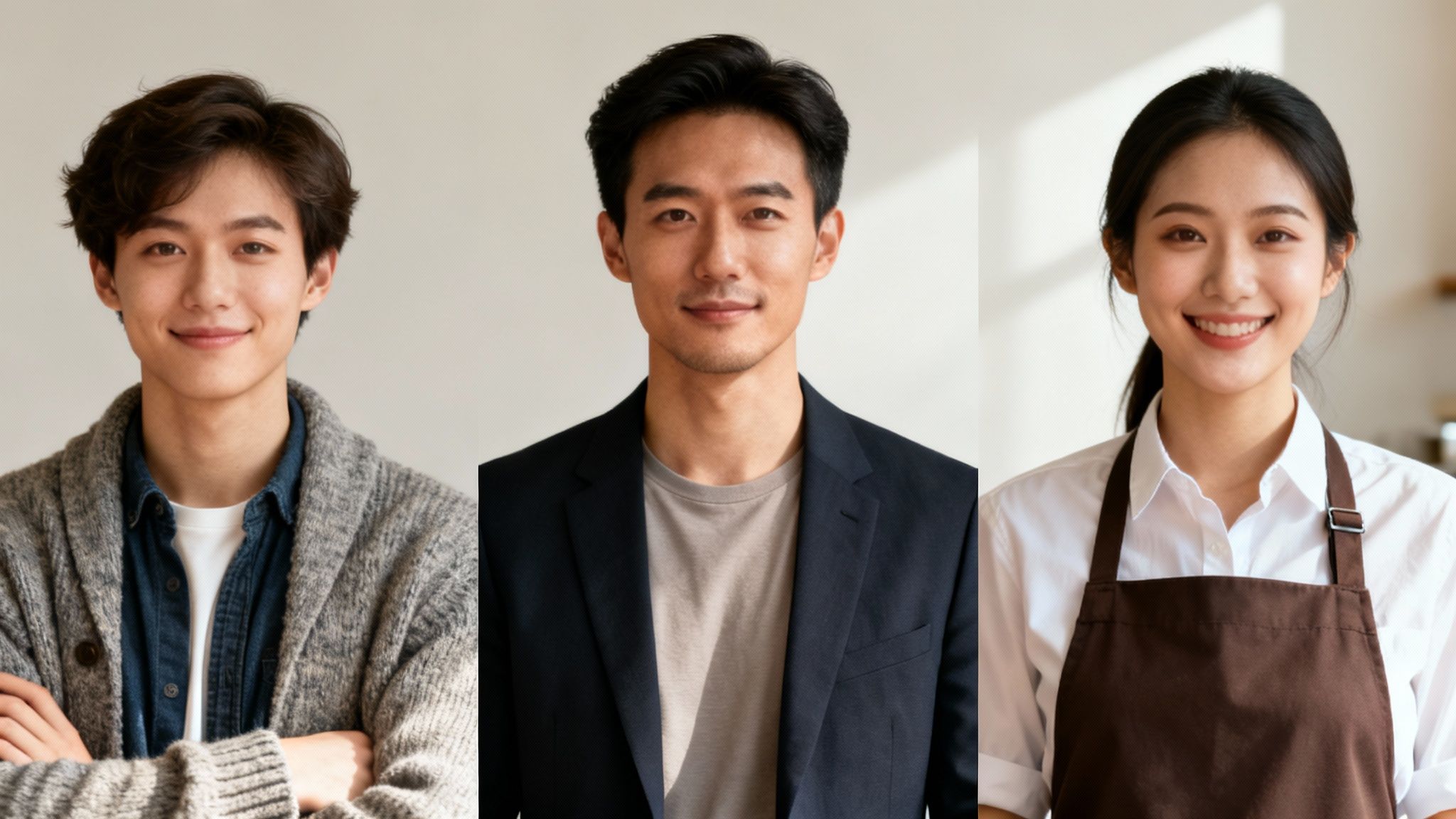
Before a casting director ever sees your resume, they see your headshot. Your clothing choice is the first thing that tells them what kind of character you can play. This isn't about putting on a full costume; it’s about using subtle visual cues to hint at the roles you were born to embody.
Forget the old, tired advice to "just wear solid colors." You need to think like a storyteller. The cut of your neckline, the texture of the fabric, even the specific shade of a color can all work together to build a commercial archetype. This is your first and best chance to show casting directors you get it—you know the market and can slide right into their project.
Dressing for Specific Commercial Archetypes
The secret is to suggest a character, not scream it. A simple, well-chosen outfit can instantly slot you into a specific category, making the casting director's job a whole lot easier. You become the obvious solution to their casting puzzle.
Here are a few common commercial types and how to dress the part:
- The Young Parent: Think approachable, practical, and warm. A soft cotton henley, a simple crewneck sweater, or a casual button-down in earthy tones like olive green, soft blue, or heather grey works wonders. The goal is to look comfortable and real, not like you tried too hard.
- The Tech Startup Founder: This look is all about blending sharp professionalism with a modern, innovative vibe. A classic combo is a well-fitted, dark t-shirt under a structured blazer. You could also go for a crisp button-down shirt with the top button undone. Stick to colors like charcoal, navy, and black to project confidence.
- The Friendly Barista or Retail Worker: You want to look clean, casual, and genuinely friendly. A simple, solid-colored t-shirt with a crew or V-neck is perfect. Jewel tones like emerald, burgundy, or mustard can add a splash of personality without being distracting. The key is looking neat and personable.
For a deeper dive into what works, check out our guide on good headshot outfits for more ideas.
A great commercial headshot wardrobe feels authentic. It should whisper a character suggestion, leaving plenty of room for your expression and personality to shine. Steer clear of loud patterns, big logos, and anything that pulls focus from your face.
Hair and Makeup: The Natural Approach
Just like your wardrobe, your hair and makeup are there to enhance your natural features, not hide them. Commercial casting almost always favors a fresh, clean, and relatable look. You just need to look like the best version of yourself on a totally normal day.
For makeup, think minimal and polished. The goal is simply to even out your skin tone, define your eyes, and add a touch of natural color to your lips. Avoid heavy foundation, dramatic eyeliner, or bold lip colors that can steal the show from your expressions.
Your hair should be neat and styled in a way that’s authentically you. Now is not the time to try a drastic new cut or color. The person in the photo needs to be the same person who walks into the audition room.
Building Your Photoshoot Checklist
Showing up prepared is the secret to a relaxed and successful shoot. Bringing a few smart options allows you and the photographer to play around and find the perfect look on the day.
Your Wardrobe Checklist
- Multiple Neckline Options: Pack a variety of tops, including crewnecks, V-necks, and button-downs. You'd be surprised how different necklines can frame your face and change the entire vibe of a shot.
- Smart Layering Pieces: Bring a few simple layers like a denim jacket, a casual blazer, or a simple cardigan. You can add or remove them in seconds to create completely different looks.
- A Range of Colors: Include a mix of go-to neutrals (grey, navy, olive) and a few solid jewel tones that you know make your skin pop.
- Minimal Accessories: Keep jewelry simple and understated. Small stud earrings or a delicate necklace are fine, but leave anything large or distracting at home.
This kind of preparation is non-negotiable in a competitive market. With the media and entertainment sectors contributing an estimated $300 million to the professional photography market, you need every advantage you can get. Planning your wardrobe shows you're a serious professional ready to book the job.
Getting the Technical Details Right
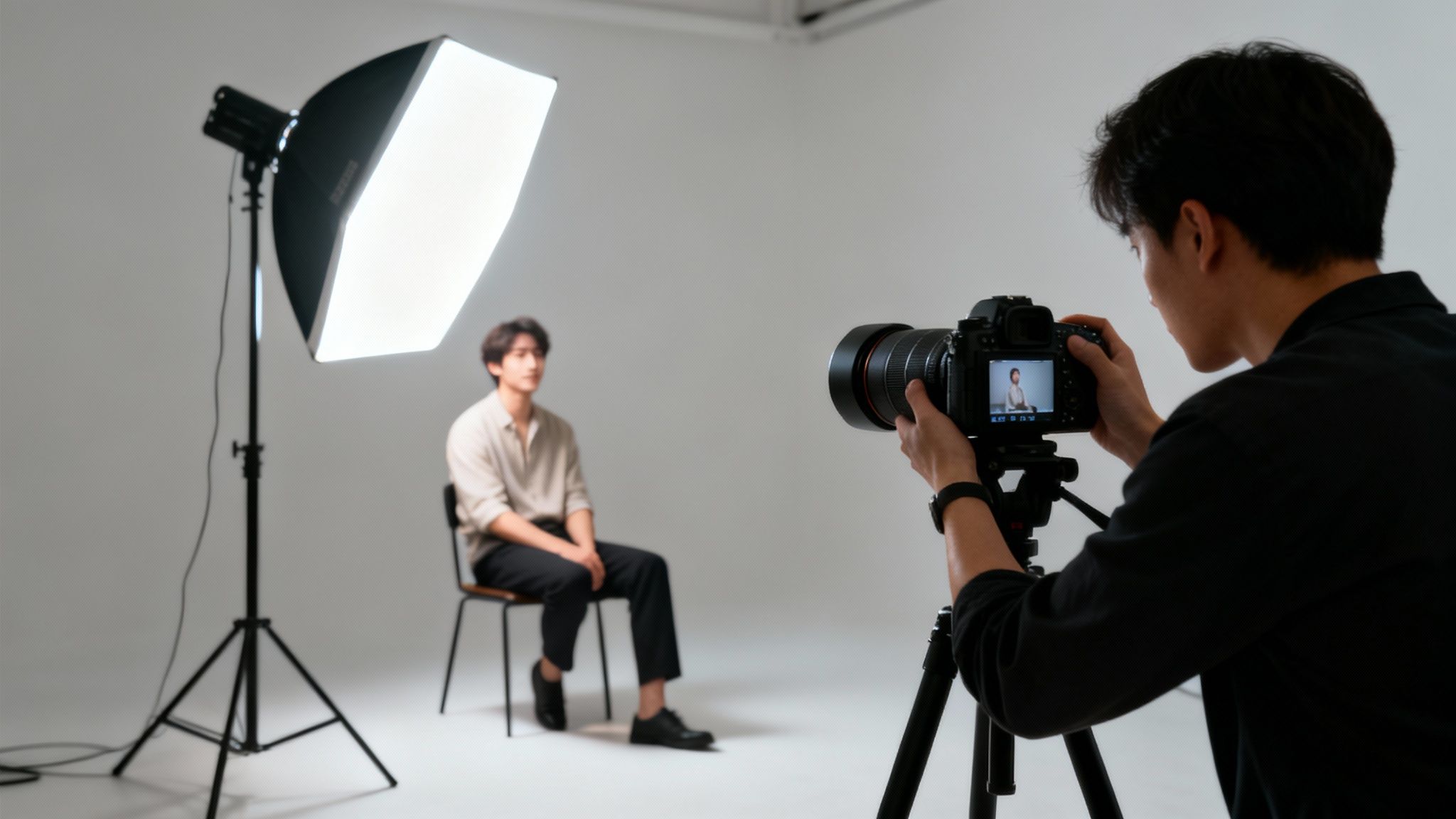
You don't have to be a master photographer, but knowing a little about the technical side of a photoshoot can make all the difference. Understanding the "why" behind certain camera and lighting choices helps you communicate better with your photographer and ensures the final shots are exactly what casting directors are looking for.
This isn't about memorizing f-stops or shutter speeds. It's about speaking the visual language of advertising. The right lens, perfect lighting, and smart framing work together to create an image that feels polished, engaging, and right at home in a commercial campaign.
Great Lighting is Everything
If you're going to obsess over one thing, make it the lighting. Commercial headshots absolutely depend on bright, clean, and even light. This isn't just a stylistic choice; it creates a feeling of energy, optimism, and trustworthiness that brands want to be associated with.
Forget the moody, dramatic shadows you might see in theatrical headshots. Here, the goal is to be open and inviting. We want to get rid of any harsh shadows on the face that could make someone look intense or tired. Soft, diffused light makes sure the expression is crystal clear and adds that little sparkle to the eyes, which is key for making a connection.
Key Takeaway: The lighting in a commercial headshot should feel bright and uplifting. It’s designed to make you look healthy, vibrant, and approachable—the kind of person a consumer would trust.
To get this look, photographers typically use large light sources like softboxes. These tools create a beautiful, flattering light that wraps around the face, minimizing imperfections and making you look fantastic. If you want to dive deeper, we've broken down several professional headshot lighting setups that nail this exact vibe.
Why Your Lens and Focal Length Matter
The lens a photographer puts on their camera has a massive impact on how you look. You know how a selfie taken from too close can distort your face, making your nose seem bigger? That's a wide-angle lens at work.
For professional headshots, we use very different tools to get a much more flattering, true-to-life result.
- Portrait Lenses (85mm - 135mm): This focal range is the industry standard for a reason. Lenses in this range gently compress your facial features and the background, giving you a natural perspective without any weird distortion. They keep you perfectly sharp while letting the background fall away softly.
This choice is what creates that professional separation from the background, making your portrait pop. It's a subtle but powerful technique that pulls all the focus right where it belongs: on your expression.
Framing the Shot for Maximum Impact
How you're positioned in the frame is another crucial piece of the puzzle. Different crops are used for different things, from casting website thumbnails to marketing brochures. Getting a variety of shots during your session gives you a versatile toolkit to work with.
Common Commercial Framing Types
| Shot Type | Description | Best Used For |
|---|---|---|
| Tight Headshot | A close-up from the top of the head to the collarbones. | Your main thumbnail image on casting sites. It's all about your face and expression. |
| Standard Headshot | Framed from the top of the head to the mid-chest. | Gives a little more context and shows the neckline of your outfit. This is the most versatile and common shot. |
| Three-Quarter Shot | Captures you from the head down to around your knees. | Great for showing your body type and posture. Often requested for roles where full-body appearance is important. |
Having a mix of these three gives a casting director everything they need to see. And in today's world, it's not just for casting—making sure your headshot is formatted correctly for platforms like LinkedIn is a must. You can use a LinkedIn graphic sizes guide to get those details just right. By mastering these technical elements, your headshots won’t just be good-looking; they’ll be strategic assets.
Bringing Authentic Expressions to Your Session
This is where the real magic happens. A technically flawless photo is worthless if the expression is stiff or forced. The entire point of headshots for commercials is to connect with someone through the lens, to make a casting director feel like they already know you.
Let's be honest, even professional actors can freeze up a bit when a camera is pointed their way. The trick is to have a few simple exercises in your back pocket. These little techniques can help you get out of your own head, relax, and let your genuine personality come through when it counts.
From Posed Smiles to Genuine Emotion
A simple smile is a starting point, but the commercial world needs more than that. Casting directors are sifting through hundreds of photos, looking for actors who can nail a specific feeling in a single shot. It’s all about showing your range and proving you can tell a story before you even open your mouth.
So, instead of just thinking "smile," you need to live in a specific thought or moment. This internal work is what turns a generic grin into an expression that gets you noticed.
Actionable Expression Prompts
- The "Pleasantly Surprised" Look: Think about a friend you haven't seen in ages suddenly walking into the room. Let that real spark of joy light up your eyes.
- The "Intrigued" Vibe: Imagine someone is telling you a really juicy piece of gossip. You'd naturally lean in a bit, your expression showing you're hanging on every word.
- The "Relieved" Moment: Picture that feeling of finally sinking into your couch after a long, exhausting day. Let your shoulders drop and a soft, gentle smile of pure relief wash over you.
- The "Helpful and Confident" Expert: Imagine you're patiently explaining something you're a total pro at to a good friend. Your expression should feel open, clear, and totally reassuring.
These aren't just vague ideas; they are specific prompts that trigger real, believable emotions. That’s the difference between just posing for a picture and actually connecting with your audience.
The Power of Subtle Body Language
Your face is only telling half the story. How you hold your body—your posture—says so much about your confidence and whether you seem approachable. Even in a tightly cropped headshot, tiny adjustments can completely change the feel of the photo.
Rigid, tense shoulders are a dead giveaway for discomfort. You want to look relaxed and easy-going, as if the photographer just happened to catch you in a great, natural moment.
Your body language has to back up the story your face is telling. A slight head tilt can suggest curiosity, while relaxed shoulders project confidence. Every little piece should work together to build a single, authentic character.
Before the first click of the shutter, take a second to loosen up. Roll your shoulders back and down. Shake out your arms. Take a few deep breaths. This quick reset can work wonders for releasing tension and getting you into a more natural state.
Body Language Tips for a Confident Look
- Relax Your Shoulders: Make a conscious effort to pull your shoulders down, away from your ears. We all hold tension there, and dropping them instantly makes you look more confident and in control.
- Find a Slight Angle: Facing the camera straight-on can look a bit like a mugshot. Try turning your body slightly to one side and then bringing your face back toward the lens. It creates a much more dynamic and engaging look.
- Use a Gentle Head Tilt: A small, subtle tilt can add a touch of warmth and curiosity, making the shot feel more like a conversation.
- Lean In (Just a Bit): A tiny lean toward the camera can create a sense of intimacy and connection, drawing the viewer in without them even realizing it.
When you combine these physical tweaks with the emotional prompts we talked about, you build a portfolio that’s both genuine and versatile. You're no longer just showing what you look like—you're showing what you can do. This is how you make sure your headshots for commercials don't just look good; they get you in the door.
Using AI to Expand Your Headshot Portfolio
Actors know the struggle all too well. You need a portfolio full of different looks, but professional photoshoots are expensive. What do you do when a last-minute casting call asks for a "friendly nurse" or a "sharp business professional," and you simply don't have that shot?
This is where AI becomes an incredibly useful tool. Think of it as a powerful supplement to your primary, professionally shot headshots, not a replacement.
Tools like YourAIPhotographer give you a practical, affordable way to generate a wide range of targeted headshots for commercials. Instead of booking an entirely new session, you can use your best existing photos to create new, high-quality images for specific roles. It ensures you always have the perfect shot ready to go.
This approach saves a ton of time and money, helping you build a diverse portfolio that speaks directly to what casting directors are looking for. You can experiment with different outfits, backgrounds, and expressions without ever stepping back into a studio.
A Practical Workflow for AI Headshots
Getting started with a platform like YourAIPhotographer is surprisingly simple. The whole idea is to take your best photos and turn them into a versatile digital version of you, which you can then direct to create endless new looks.
The process kicks off when you upload a handful of your favorite photos. These are the raw ingredients the AI needs to learn your unique features.
Upload Your Best Photos: You'll want to select 10-20 clear, well-lit images of yourself. A good mix of angles, expressions, and even backgrounds is perfect. The better the input photos, the more realistic and accurate your new headshots will be.
Choose Commercial-Friendly Styles: Once your model is ready, you can browse a library of pre-set styles. Look for options like "Professional," "Corporate," or "Lifestyle," as these usually have the bright, clean lighting that works so well for commercial shots.
Use Simple Prompts to Define the Look: Here’s where you get to play director. You can use plain English to describe exactly what you need. For instance, you could type: "Headshot of a friendly nurse in blue scrubs, in a brightly lit hospital hallway, smiling warmly at the camera."
This level of control means you can generate images tailor-made for specific auditions, which can give you a real edge. You’re creating visuals that make a casting director's decision incredibly easy.
The key to a great shot, whether from a camera or an AI, is capturing an authentic expression. It all comes down to a simple, three-part process.
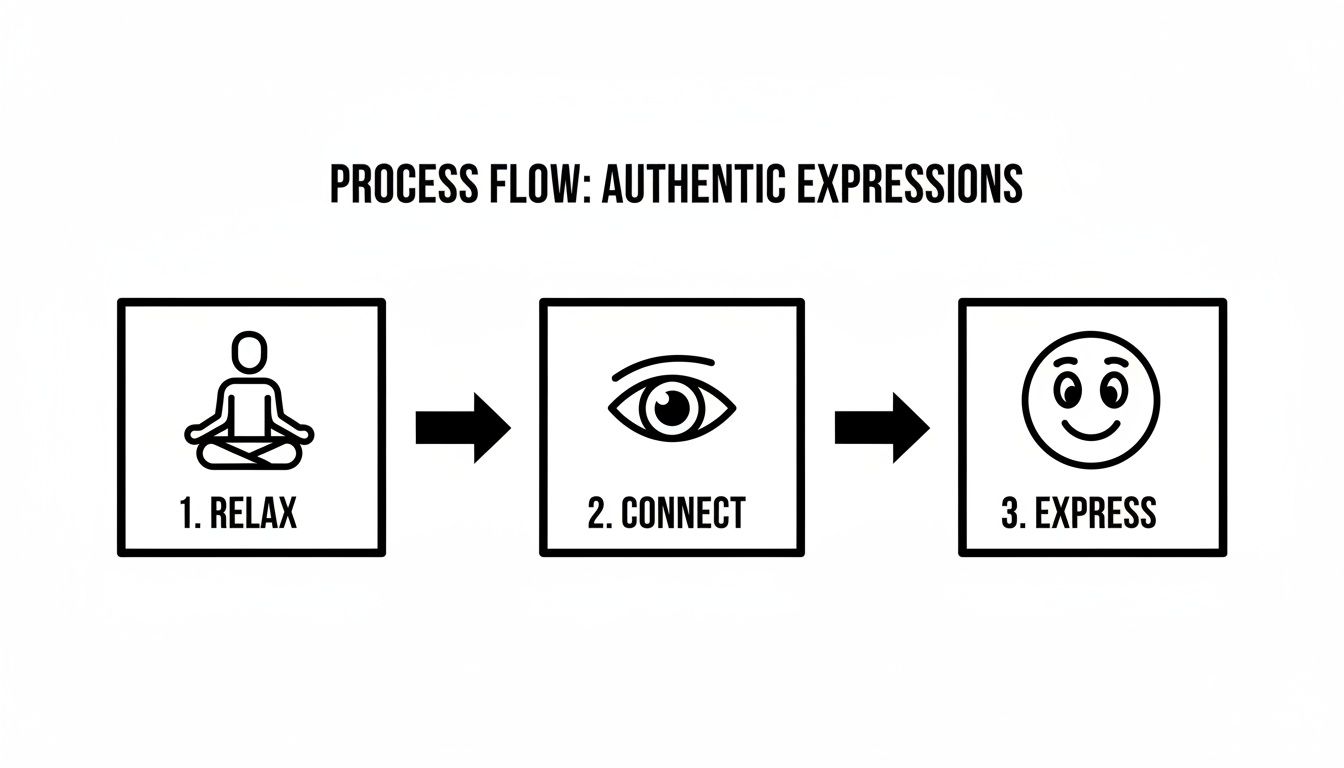
This just goes to show that genuine connection—whether with a photographer or through a well-written AI prompt—is what creates a headshot that truly stands out.
Building a Diverse Portfolio Quickly
The real power of using AI is speed. You can build out your portfolio to cover a huge range of commercial archetypes in a single afternoon. Generating the same variety with a traditional photographer would require multiple expensive shoots and a suitcase full of wardrobe changes.
Here’s a look at how you can see the two options stack up.
Traditional Photoshoot vs YourAIPhotographer
| Feature | Traditional Photoshoot | YourAIPhotographer |
|---|---|---|
| Upfront Cost | $500 - $2,500+ | $29 - $99 (one-time) |
| Turnaround Time | 1-3 weeks | 30-90 minutes |
| Number of Looks | Limited (2-4 per session) | Unlimited |
| Flexibility | Set once session is booked | On-demand, anytime |
| Creative Control | Collaborative with photographer | Direct control via text prompts |
| Best For | Primary, "hero" headshots | Portfolio expansion, specific roles |
While nothing beats an in-person session for your main headshots, using AI to fill in the gaps is a game-changer. It lets you pivot from a corporate look to a casual lifestyle shot in minutes, adapting to any casting call that comes your way.
By using AI, you can affordably test out new character types and expand your brand without the financial risk of a full photoshoot. It's a low-cost way to discover which looks resonate most with casting directors.
This technology isn't just a niche trend; it's becoming a major force. The AI headshot market is exploding, projected to hit USD 500 million by the end of 2025. This rapid growth shows just how valuable these tools have become for professionals everywhere.
If you’re interested in the bigger picture, our article on the role of AI for photography explores how these tools are changing the creative landscape.
Ultimately, integrating AI into your strategy is about being prepared. It ensures that no matter what role comes up, you have a polished, role-specific headshot ready to go, maximizing every single opportunity to get noticed and book the job.
Common Questions About Commercial Headshots
Stepping into the world of commercial headshots can feel a bit overwhelming. You've got questions about when to get new photos, what casting directors actually want to see, and how to make sure you're spending your money wisely. Let's clear the air and tackle some of the most common questions actors have about their single most important marketing tool.
Getting these things straight from the get-go means you can move forward with confidence, knowing your portfolio is primed and ready to book work.
How Often Should I Update My Headshots?
This is easily the question I hear most often, and the answer is refreshingly simple: update your headshots whenever your look changes in a meaningful way. The person in that photo absolutely must be the person who walks into the audition room. There's no wiggle room on this one.
A good rule of thumb is to refresh your shots every one to two years. But some life changes should trigger an immediate photoshoot, no matter how recent your last session was.
Time for an Update Checklist:
- Drastic Hairstyle Change: If you chopped off your long hair, grew out a pixie cut, or went from blonde to brunette, you need new shots. Yesterday.
- Significant Weight Change: If you’ve noticeably gained or lost weight, your headshot has to reflect your current appearance.
- New Glasses or Facial Hair: Started wearing glasses full-time? Grew a beard or a mustache? That’s a new look, and it needs a new headshot.
- Aging: As you move into a new age bracket (say, from your late 20s to your early 30s), new photos help casting see you for more age-appropriate roles.
Your headshot is your calling card. Keeping it current isn’t just a good idea—it’s a professional necessity. An outdated photo can quietly signal to casting directors that you might not be taking your career seriously.
Do I Really Need Different Shots for Different Commercials?
While you don't need a unique headshot for every single audition, having a small, curated set of looks is an incredibly smart move. It shows casting directors your range before you even say a word and, frankly, makes their job easier.
Instead of relying on one generic "friendly" photo, think more strategically. Having a few specific options in your portfolio can make all the difference.
- The Professional/Corporate Look: This is you looking polished, confident, and knowledgeable. It's perfect for landing roles as a doctor, financial advisor, or tech expert.
- The Casual/Lifestyle Look: Think "approachable parent" or "trusted best friend." This shot is your go-to for consumer goods and family-focused products.
- The Specific Skill Look: If you have a marketable skill, show it off. A shot in athletic wear for a fitness enthusiast, for example, is a powerful and direct asset.
Having 3-5 distinct, high-quality commercial headshots gives you the flexibility to submit the most compelling image for every opportunity. It proves you understand the market.
What Is the Difference Between Retouching and Editing?
Knowing the lingo here is key to communicating with your photographer and getting the results you want. Both editing and retouching are vital for a polished final image, but they do very different things.
Editing is the foundational work. It's the first pass on every single photo and includes adjustments to things like:
- Brightness and contrast
- Color correction and white balance
- Overall sharpness
- Cropping and composition
Retouching, on the other hand, is the detailed fine-tuning. This is where a photographer will carefully remove temporary blemishes like a pimple or a stray hair. The goal of great retouching is to make you look like you on your very best day, not to make you look like a different person.
Think of it this way: editing fixes the photograph, while retouching enhances the subject within it. Heavy-handed retouching is a major red flag in headshots for commercials, where authenticity is everything. You should still have pores and laugh lines—that’s what makes you look like a real, relatable human.
The cost of professional photography, retouching included, can vary quite a bit. To get a feel for what to budget, it helps to understand the factors that influence how much a professional headshot can cost.
Can I Use the Same Headshot for Commercial and Theatrical Auditions?
Please don't. This is one of the fastest ways to get your submission tossed aside. Submitting a bright, smiley commercial headshot for a gritty drama (or vice versa) shows a fundamental misunderstanding of what each side of the industry is looking for.
The two types of headshots communicate completely different messages.
A big, warm commercial smile simply doesn't convey the depth needed for a serious theatrical role. On the flip side, an intense, moody theatrical shot can make you seem unapproachable and all wrong for an upbeat, friendly commercial. For any serious actor, having separate, purpose-driven headshots is non-negotiable.
Ready to create a diverse portfolio of commercial headshots without the high cost and long waits of traditional photoshoots? With YourAIPhotographer, you can generate unlimited, studio-quality images tailored to any role, from "tech founder" to "young parent," in just minutes. Use your best photos to create a personal AI model and direct it to produce the exact looks you need to win your next audition. Get started today at https://youraiphotographer.com.