

Your Guide to AI Influencers on Instagram
Discover the world of AI influencers on Instagram. Learn how these digital creators work, why brands love them, and how you can build one from scratch.
Table of Contents
You’ve probably scrolled past one on your Instagram feed without even realizing it. They look human, they post about their day, and they partner with big brands. The only catch? They aren't real.
Welcome to the world of AI influencers.
What Are AI Influencers on Instagram?
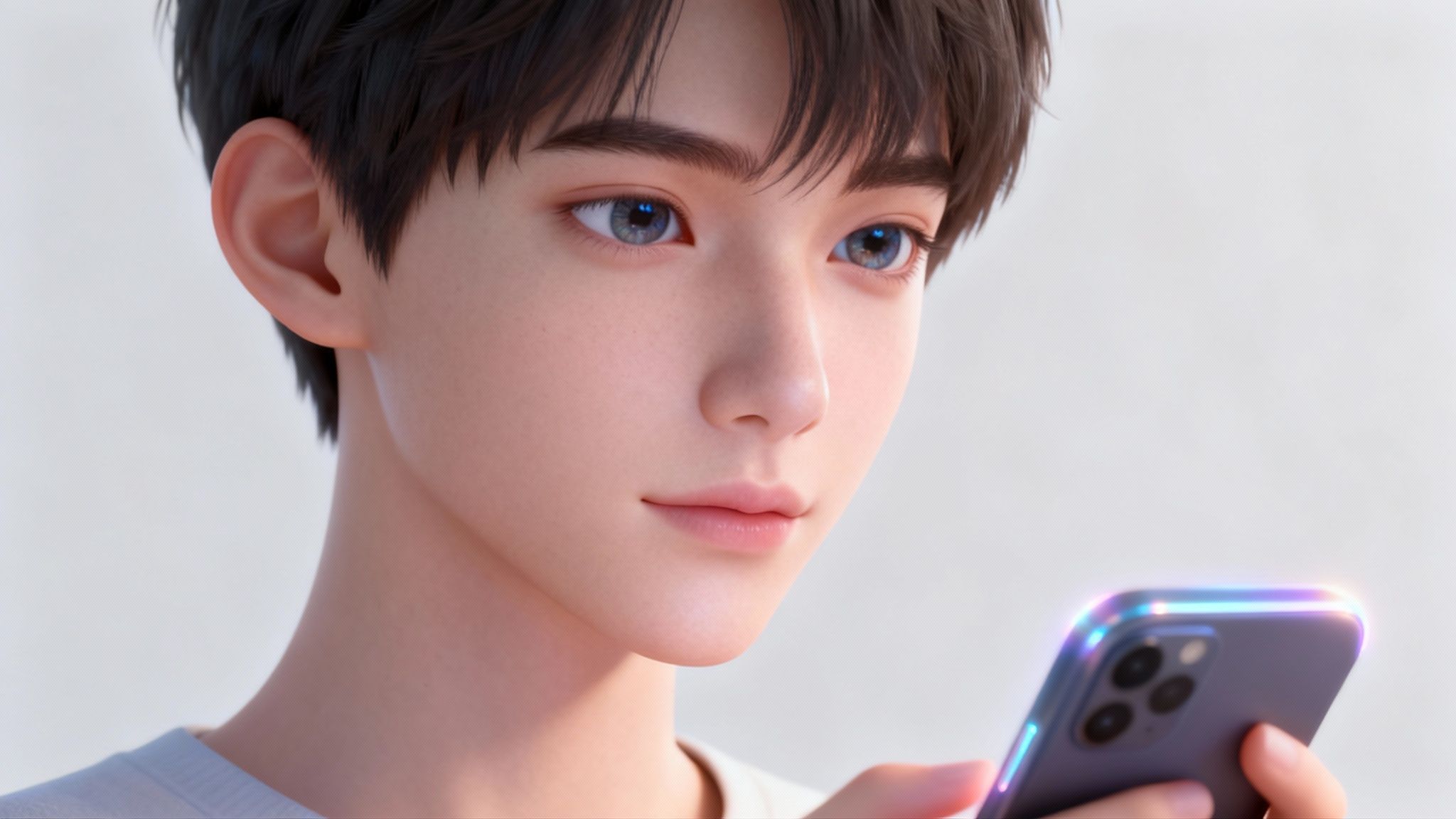
At their core, AI influencers are virtual characters crafted by creative teams using computer graphics and artificial intelligence. These digital personas live and breathe on social media, building genuine communities and inking deals just like their human counterparts.
Imagine your favorite character from a video game suddenly started their own Instagram account. That's essentially an AI influencer. They're brought to life with stunning computer-generated imagery (CGI) and given a "voice" through AI-driven scripts and carefully planned narratives.
But don't mistake them for simple bots. Behind every successful virtual influencer is a dedicated team of human creators—artists, writers, and social media strategists. They build everything from the ground up: personality, backstory, fashion choices, and even social stances.
The Magic Behind the Persona
Creating a believable digital star is a mix of high-tech tools and good old-fashioned storytelling. It all comes down to a few key ingredients.
- 3D Modeling and CGI: Artists use powerful software like Blender or Maya to sculpt the influencer's appearance, from their facial structure to their unique style. The process is a lot like creating characters for a big-budget animated movie.
- Generative AI: This is where things get really interesting. Modern tools can generate photorealistic backgrounds, outfits, and entire scenes, making content creation faster than ever. You can even create your own AI influencer persona using specialized platforms.
- A Compelling Story: Technology is just the tool. The real secret sauce is the story. A strong narrative helps followers connect on an emotional level, making them forget they're following a digital creation.
A New Chapter in Digital Marketing
This blend of tech and storytelling has unleashed a powerful new force. The AI influencer market is on track to hit a valuation of nearly $7 billion by 2025, a clear sign that how brands think about advertising is changing fast.
To get a clearer picture, let's look at a side-by-side comparison.
AI Influencer vs Human Influencer Key Differences
This table breaks down the core differences between virtual and human influencers, highlighting why brands might choose one over the other.
| Attribute | AI Influencer | Human Influencer |
|---|---|---|
| Control | 100% controlled by creators. No unexpected controversies. | Independent. Can have personal scandals or go off-brand. |
| Availability | 24/7/365. Can appear anywhere in the world instantly. | Limited by time zones, travel, and personal schedules. |
| Cost | High initial creation cost, but lower ongoing campaign costs. | Variable fees per post, story, or campaign. |
| Scalability | Can be in multiple campaigns or locations simultaneously. | Limited to one place and one project at a time. |
| Authenticity | Crafted persona. Authenticity is built through storytelling. | Genuine human experiences. Authenticity is inherent but can be fragile. |
| Longevity | Ageless. Can exist forever as long as the tech is maintained. | Career is subject to aging, changing interests, and audience shifts. |
As you can see, the appeal for brands is undeniable.
AI influencers offer brands what human influencers cannot always guarantee: complete control over messaging, 24/7 availability, and immunity from real-world controversies. This predictability makes them an incredibly attractive asset for global campaigns.
Early pioneers have already shown what’s possible. Characters like Lil Miquela, a virtual musician and activist, and Aitana López, a pink-haired fitness model, have landed massive deals with brands like Prada, Calvin Klein, and Samsung. They've proven that real influence is no longer exclusive to real people.
The Unstoppable Rise of Virtual Personalities
AI influencers didn't just pop up on Instagram out of nowhere. Their journey was a slow burn, a gradual evolution that rode the wave of decades of tech progress and our changing relationship with the digital world. Think of the early digital avatars in video games and old-school online forums—they were the ancestors of today's virtual stars.
Sure, those first attempts were clunky and obviously fake. But they proved a critical point: people were perfectly willing to connect with characters that weren't real. As computer-generated imagery (CGI) got better and better, thanks mostly to Hollywood and the gaming industry, the line between what was real and what was digital started to get fuzzy. That was the first piece of the puzzle.
The second piece was the explosion of social media. Platforms like Instagram gave us a whole new type of celebrity—the influencer. We got used to following the curated lives of people we’d never meet in person. This shift made the idea of following a created person feel a lot less strange than it would have a decade ago.
The Pioneers Who Redefined Influence
The real game-changer happened when creators mashed up incredible CGI with genuinely human-like stories. A few key players emerged from the digital ether and proved that an AI influencer on Instagram could rack up millions of followers and score massive brand deals.
Lil Miquela (@lilmiquela): Launched back in 2016, Miquela is pretty much the OG of virtual influencers. Her creators, Brud, didn't just make a pretty face; they gave her a whole life, complete with drama, friendships, and even a music career. She’s worked with huge names like Prada, Calvin Klein, and Samsung, proving this whole concept had serious commercial legs.
Shudu (@shudu.gram): Created by photographer Cameron-James Wilson, Shudu was introduced as the "World's First Digital Supermodel." Her stunning, hyper-realistic look forced the fashion world to take notice and sparked a massive conversation about beauty and reality. She even landed campaigns with brands like Fenty Beauty.
Imma (@imma.gram): You can't miss Imma with her signature pink bob and impeccable fashion sense. This virtual model from Japan became a cultural icon by blending seamlessly into real-world photoshoots and events, collaborating with giants like IKEA and Gucci.
These digital celebrities aren’t just one-off experiments. They represent a real shift in how marketing and media work. What they taught everyone is that authenticity isn't necessarily about being human—it's about telling a consistent, relatable story.
The success of early virtual influencers demonstrated a crucial insight: audiences crave compelling narratives and consistent personas, regardless of whether the creator is made of flesh or pixels. This opened the door for a new era of digital marketing.
Today, the space is packed with all kinds of virtual beings, each with their own unique style and audience. Their rise shows that this concept has gone from a weird novelty to a legitimate, powerful strategy. To see a full lineup of today's digital stars, check out our detailed guide on the top AI influencers making waves online. Their impact is only getting bigger, completely changing our idea of what it means to be influential.
Why Big Brands Are Betting on Digital Humans
The move toward using digital faces in major campaigns isn't just some tech fad—it's a calculated business play. Top brands are teaming up with AI influencers because they offer something traditional marketing just can't: a powerful mix of total control, brand safety, and incredible scale.
Think about it. What if you could run a campaign where every single post, story, and comment was perfectly on-brand, every single time? With an AI influencer, that's the reality. Brands get 100% control over the narrative. You completely sidestep the risks that come with human partners—no off-brand comments, no personal scandals, no real-world drama that can torpedo a campaign overnight. It's like having a digital puppet master ensuring the message is always exactly what you want it to be.
That control leads directly to guaranteed brand safety. A virtual influencer isn't going to post something questionable from a late-night party or get into a Twitter feud. They are built from the ground up to embody a brand's values, making them a clean, predictable, and totally reliable partner in an age where one bad tweet can spark a PR firestorm.
Supercharging Efficiency and Global Reach
Beyond the safety net, the practical advantages are huge. An AI influencer can work 24/7. They don't get tired, they don't take vacations, and they aren't tied to a single time zone. This "always-on" nature lets brands connect with a global audience all at once, running campaigns in New York, Tokyo, and London at the same time without the usual logistical headaches.
This constant availability opens the door to massive scalability.
- Run Multiple Campaigns at Once: A single AI influencer can be the face of several different products or promotions simultaneously. A human creator simply can't be in that many places at once.
- Travel Instantly: Need a photoshoot in the Swiss Alps? Done in seconds. A beach scene in Bali? No problem. You get stunning content without spending a dime on flights, hotels, or production crews.
- Speak Any Language: A digital human can be programmed to chat with followers in dozens of languages, building a much more personal connection with fans all over the world.
At its core, the appeal for brands is simple: they can de-risk and supercharge their influencer marketing all at once. AI influencers are a predictable, scalable, and endlessly flexible tool that can be shaped to fit any market or campaign on demand.
All this efficiency adds up to a major financial win. Sure, creating a convincing AI influencer takes an upfront investment, but the long-term savings are often significant. You're not paying recurring talent fees, covering travel expenses, or renegotiating contracts for every single campaign.
The numbers don't lie. In 2025, campaigns using AI influencers on Instagram have shown a clear cost advantage. The data from the industry shows that these campaigns deliver a 12–15% lower cost per engagement than similar campaigns with human influencers, a direct result of cutting out all those production and logistical costs. You can dive deeper into the performance data for AI influencer campaigns to see the full breakdown.
The Double-Edged Sword: Hype vs. Authenticity
Finally, you can't ignore the buzz factor. Teaming up with an AI influencer is still new and exciting for most people. This novelty alone can generate a ton of free media attention and higher engagement right out of the gate, simply because people are curious to see what these digital characters are all about. It's a great way for a brand to cut through the noise on a crowded social feed.
But it’s not all smooth sailing. The biggest hurdle is audience skepticism. If a virtual persona comes across as too perfect or its story feels hollow, people will tune out. The AI influencers who truly succeed are the ones with brilliant creative teams behind them—teams that know how to craft a compelling, relatable, and even flawed personality. Nailing that balance is what turns a cool digital creation into a personality that actually influences people and drives real results for brands.
How to Create Your First AI Influencer
Ready to jump in and build your own AI influencer? It might sound incredibly technical, but the process is far more about creative strategy than it is about coding. It really boils down to a few key stages anyone can tackle.
The journey starts not with an app, but with a story. A memorable virtual personality needs a soul long before it has a face. This foundation is what will actually connect with an audience and make your creation stick.
Stage 1: Craft a Compelling Identity
Before you generate a single image, you need to know who you're creating. This is, without a doubt, the most important part. A stunning visual without a personality is just a digital mannequin. Start by asking some basic questions to build out their character.
What’s their personality? Are they an adventurous, outdoorsy type? A thoughtful bookworm? A high-fashion tastemaker? Maybe a down-to-earth fitness guide? Pinpoint three to five key traits that will shape every piece of content they ever post.
Next, give them a backstory. Where are they from? What do they love? What are their goals, or even their flaws? A bit of history makes them feel more real and gives you a deep well of content ideas to pull from for months.
"A successful AI influencer is 10% technology and 90% storytelling. The visuals grab attention, but the personality and narrative are what build a loyal community."
Finally, nail down their niche. Trying to be everything to everyone is a surefire way to be nothing to anyone. A specific focus—like sustainable fashion, vegan cooking for beginners, or retro gaming—is how you attract a dedicated audience that truly cares about what you're sharing.
Stage 2: Design the Visual Persona
Once you have a solid identity, it's time to bring that character to life. The tools out there today are amazing, ranging from dead-simple to incredibly complex, so you can pick what works for your skill level and budget.
For beginners, AI image generators are the perfect place to start. Platforms like Midjourney or Stable Diffusion can create shockingly realistic portraits from simple text prompts. You can describe your influencer’s look, style, and setting to get a consistent feel.
For more fine-tuned control, you can use a platform like YourAIPhotographer. Here, you upload a handful of reference photos to train a custom AI model of your influencer. This lets you generate unlimited, photorealistic images of the exact same "person" in any scenario you can dream up, which is key for visual consistency. For a deeper dive on this, check out our guide on how to create a custom AI avatar.
The most advanced route involves 3D software like Blender or Daz 3D. This gives you absolute control over every last detail but comes with a steep learning curve. It's the path taken by top-tier virtual influencers like Lil Miquela.
Stage 3: Produce Engaging Content
With a face and a personality, the real work begins: creating their world. This is where you merge the story with the visuals to start telling it on Instagram. The heart of making an AI influencer feel alive is all about the content you generate; exploring AI social media content creation can really help simplify this part of the job.
Your content should be a direct reflection of the identity you built in stage one.
- Lifestyle Shots: Put your influencer in situations that fit their persona. If they’re a travel bug, generate images of them "visiting" Paris, Tokyo, or the Amazon rainforest.
- Brand Collaborations: Create mock-ups showing your influencer partnering with brands in their niche. This builds a portfolio and shows potential partners what’s possible.
- Interactive Content: Use Instagram Stories for polls and Q&As. Have your influencer "answer" follower questions to start building a real sense of community.
This graphic breaks down a few of the reasons why brands are getting so interested in working with AI influencers.
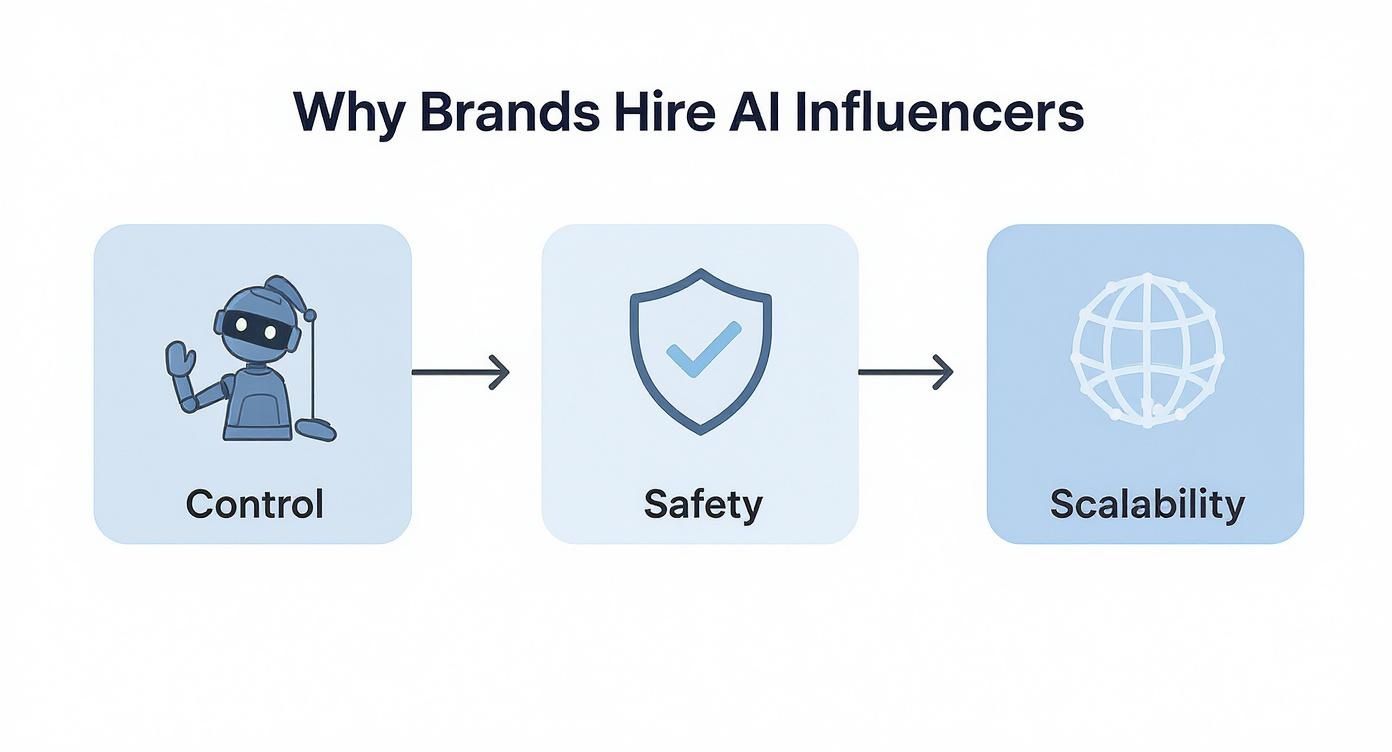
As you can see, it really comes down to having complete creative control, avoiding real-world drama, and being able to scale a campaign anywhere in the world without logistical headaches.
Stage 4: Develop a Unique Voice
Finally, how your influencer communicates is just as critical as how they look. Their captions, comments, and replies need to match their personality perfectly. This consistent voice is what turns a gallery of images into a character people believe in.
Decide on a clear tone. Are they witty and sarcastic? Warm and inspiring? Or maybe more formal and educational? Create a simple style guide that outlines their vocabulary, how they use emojis, and their general vibe. This voice is the glue that will hold their entire digital world together.
Growing and Monetizing Your Virtual Creator
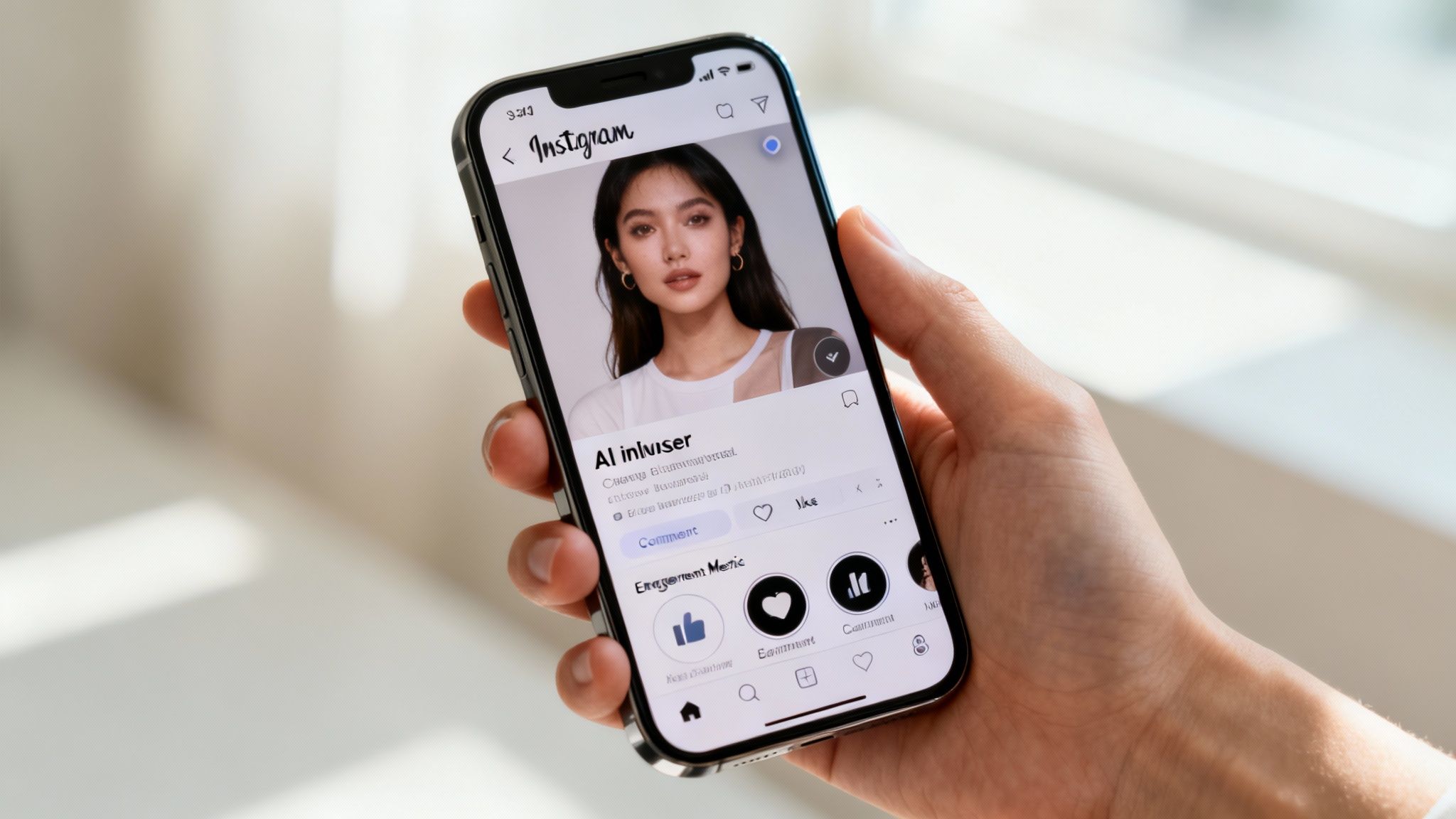
Okay, you've brought your AI influencer to life. That’s a huge first step, but the real work starts now: building a community and figuring out how to make this a real, sustainable project. Growth and monetization go hand-in-hand. A big, active audience attracts brands, and smart revenue streams give you the resources to keep creating great content.
The fundamental idea is pretty straightforward. You need to treat your virtual creator just like you would any human influencer who's just starting out. That means being consistent, engaging with your audience, and delivering content that your specific niche actually wants to see. Your content plan should feel like a continuous story, with every post and caption adding another layer to the personality you've created.
Strategies for Audience Growth
Getting your AI influencer on Instagram in front of new eyes takes a bit of strategy. You're playing the same game as everyone else, but you have the unique advantage of being entirely digital.
Play the Algorithm Game: Don't just stick to photos. Reels are your best friend for getting discovered by people who don't follow you yet. Use Stories to connect with the followers you already have—run polls, do Q&As, and make them feel like part of the journey.
Hashtags That Actually Work: Forget generic tags like
#AIor#virtual. Dive deep and find a mix of popular hashtags, super-niche tags, and community-specific ones. See what other successful accounts in your space are using and learn from them.Be a Real "Person" in the Comments: Yes, your influencer is code, but the people commenting are real. Replying to comments and DMs in your character's voice is what builds a loyal community. It makes followers feel like they're interacting with someone, not just a profile.
Team Up with Other Creators: This is a classic for a reason. Partnering with other AI influencers or even human creators in a similar niche is a fantastic way to cross-promote. It’s a direct introduction to a whole new audience that’s probably already into what you're doing.
Unlocking Diverse Revenue Streams
Once you've got some traction, it's time to think about money. Understanding the different strategies for monetizing social media is crucial. Brand deals are what everyone thinks of first, but they’re just the tip of the iceberg. Having multiple income streams makes your project much more stable.
Don't pigeonhole your virtual creator into just doing brand deals. The most successful AI influencers build a whole ecosystem around their persona, turning a digital identity into a real business.
Think outside the box of traditional advertising. Your influencer’s digital nature opens up some really cool opportunities.
- Brand Sponsorships: The tried-and-true method. Find brands that genuinely fit your influencer’s vibe and story to create sponsored posts, Reels, and stories.
- Affiliate Marketing: Promote products or services you actually like. When your followers buy through your unique link, you get a cut. It’s that simple.
- Selling Digital Products: This is where being virtual is a huge advantage. You can create and sell things like digital art, custom photo filters (presets), or even e-books and guides related to your niche.
- Licensing Your Persona: This is a big one. Brands might want to "hire" your AI influencer to be the face of their next ad campaign, using their image on their website or in commercials. It's a great way to earn significant income with less day-to-day effort.
By mixing these approaches, you can build a solid financial footing for your virtual creator. For a deeper dive, check out our complete guide on how to monetize your social media presence, which is packed with actionable advice for any creator. You can find it right here: https://youraiphotographer.com/blog/how-to-monetize-social-media
Navigating the Ethical and Legal Maze
https://www.youtube.com/embed/5kjxBd16sm4
There's no doubt that creating an AI influencer on Instagram is an exciting creative venture. But with this new power comes a new set of responsibilities. As these digital people become almost indistinguishable from real ones, we have to talk about the ethical and legal lines we can't cross.
The biggest issue right away? Transparency.
It's one thing for an audience to follow a cartoonish avatar, but when an AI influencer looks and acts completely human, people might not know they're interacting with a digital fabrication. This kicks off a huge debate: should creators have to label their work as "virtual"? Many people think so. They argue that not telling your audience is a form of deception, especially when you're getting paid to promote products.
The problem with AI influencers isn't that they exist—it's the risk of fooling people. Being upfront and honest builds a real connection with your audience. Hiding the truth just makes people feel manipulated and kills your credibility.
Key Ethical Questions for Creators
Beyond just telling people your influencer isn't real, you have to think about the impact your creation has on the world. These digital personalities can shape opinions and trends just like human influencers, so you've got to be thoughtful.
Here are a few things to keep in mind:
- Unrealistic Standards: AI makes it easy to create "perfect" people who are literally flawless. The danger here is promoting beauty or lifestyle standards that are impossible for anyone to achieve, which can be genuinely harmful to your followers' mental health.
- Data and Privacy: Your AI influencer will be interacting with people, getting comments, and receiving DMs. How you handle that data is a big deal. You have an ethical duty to protect your audience's privacy.
- Representation: You have the power to design an influencer from any background you can imagine. This is a fantastic opportunity to champion diversity, but it also comes with the risk of falling back on lazy stereotypes. Be intentional and respectful.
Staying on the Right Side of the Law
The legal side of things is just as important as the ethics. The law is still playing catch-up with AI, but plenty of existing rules already apply to virtual influencers. Ignoring them can land you in serious hot water.
At the heart of all this is the concept of synthetic media—a term for any content generated by AI. To get a better handle on the tech, you can check out our guide that explains what is synthetic media and what it means for creators.
When it comes to the law, two areas demand your attention:
- Advertising Rules: In the US, the Federal Trade Commission (FTC) has strict rules about endorsements, and they apply to AI influencers just like human ones. If you're getting paid to post, that content must be clearly disclosed. Think
#ador#sponsored. No exceptions. - Intellectual Property (IP): Your AI character is a piece of intellectual property. Whoever created it owns the rights to its image, name, and backstory. This also means you can't just create a digital clone of a real celebrity—that would violate their "right of publicity."
At the end of the day, building a successful AI influencer comes down to integrity. Be honest with your audience, follow the law, and you’ll create a community that's not just engaged, but also built on a solid foundation of trust.
Frequently Asked Questions About AI Influencers
As AI influencers pop up more and more on our Instagram feeds, it’s completely normal to have a few questions. The whole concept blurs the lines between reality and creation, so let's tackle some of the things people are most curious about.
One of the first questions on everyone's mind is usually: "Is this even legal?" The short answer is yes, creating and using an AI influencer is perfectly legal. But, and this is a big but, they have to play by the same rules as human influencers. That means following advertising laws, like the FTC’s guidelines, and clearly labeling sponsored posts. You also have to be careful not to step on any toes when it comes to intellectual property—your creation can't be a copy of an existing character or a real person's likeness.
How Do They Make Money, and Can I Create One?
Okay, so how does a digital person earn actual money? It's simpler than you might think. They generate income in the same ways human creators do. Their main money-makers are:
- Brand Sponsorships: Getting paid by companies to feature products in posts and stories.
- Affiliate Marketing: Earning a cut when their followers buy something using a special link.
- Digital Products: Creating and selling their own virtual goods, like custom photo filters or digital artwork.
- Licensing Their Likeness: Brands can "hire" the virtual influencer to star in bigger advertising campaigns, just like they would a model or celebrity.
This naturally leads to the next question: Is this something anyone can do? Absolutely. The tools needed to get started are more accessible than ever before. While turning an AI persona into a superstar still requires a great content strategy and a lot of creativity, you don't need a massive visual effects budget to get off the ground anymore.
A huge misconception is that the followers of AI influencers are fake. The truth is, they build real communities of human followers who connect with their stories, aesthetics, and the novelty of it all. This often results in engagement rates that are through the roof.
This isn't just a niche trend; it's becoming a core part of modern marketing. New data reveals that over 60% of marketing professionals are already using AI in their influencer campaigns, with 22.4% using it heavily. It's a clear signal that brands are embracing new ways to engage with people, which you can read more about in these deeper insights on Instagram marketing trends.
Ready to bring your own digital star to life? With a tool like YourAIPhotographer, you can train a custom AI model of your influencer in minutes. From there, you can generate an endless stream of professional, studio-quality images perfect for building an incredible Instagram feed. Start creating your virtual persona today.