
What Makes a Quality Photo Studio Worth It
Discover what defines a quality photo studio. Our guide explains the key elements, costs, and how to choose the right partner for incredible visual results.
Table of Contents
When you hear "photo studio," you might picture a simple room with a backdrop and a camera. But a quality photo studio is a whole different ballgame. It's less of a room and more of a precision-engineered environment where technology, skill, and well-honed processes come together to create consistently stunning images.
What Makes a Photo Studio "Quality"?
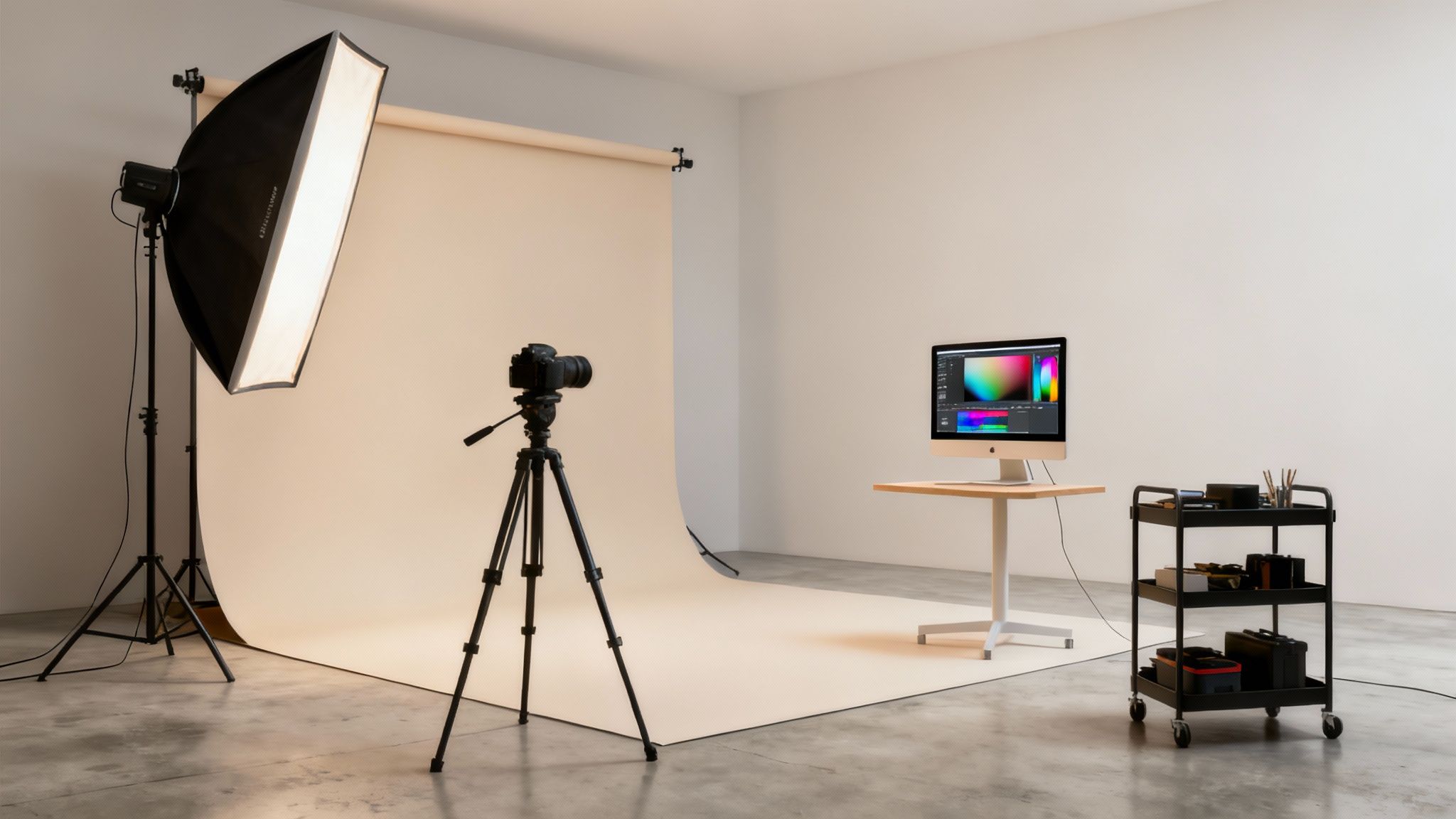
Think about it like this: you can cook a meal in your kitchen at home, or you can dine at a Michelin-star restaurant. Both will get you fed, but the restaurant's kitchen is built from the ground up for precision, consistency, and an unforgettable result every single time. A quality photo studio works the same way, turning the creative art of photography into a reliable, high-impact service.
This professional environment isn't just about one thing; it's a combination of key elements working together:
- Professional-Grade Equipment: We're talking way beyond a nice camera. A pro studio has an arsenal of lighting gear like strobes, softboxes, and reflectors, plus a collection of specialized lenses and color-calibrated monitors to make sure what you see is what you get.
- An Experienced Crew: A great studio runs on human expertise. This always includes a seasoned photographer with a deep portfolio, but often extends to a team of stylists, assistants, and retouchers who handle everything from prepping a product to polishing the final shot.
- Refined Production Workflows: The best studios don't just "wing it." They operate on solid systems for everything—client onboarding, planning the shoot, executing the shots, and handling post-production. This keeps projects running smoothly, on time, and within budget.
- Clear Communication and Collaboration: Top-tier studios are creative partners, not just service providers. They dig deep to understand your goals, offer their expert advice, and keep you in the loop from the first idea to the final file delivery.
Quick Guide to Studio Characteristics
To make it even clearer, here's a quick breakdown of what separates a basic setup from a true professional studio.
| Element | Basic Setup | Quality Photo Studio |
|---|---|---|
| Lighting | A couple of lights, maybe natural window light | A full suite of controlled strobes, softboxes, grids, and modifiers |
| Team | A single photographer, often a jack-of-all-trades | A dedicated team: photographer, assistants, retouchers, stylists |
| Process | Informal planning, flexible (sometimes chaotic) workflow | Structured pre-production, shot lists, and a reliable post-production system |
| Consistency | Results can vary from shoot to shoot | Predictable, repeatable, high-quality results every time |
Ultimately, a quality studio delivers a guaranteed outcome, not just a collection of photos.
The Growing Demand for Professional Imagery
The need for amazing visuals has never been higher, especially for businesses. The global photography services market was valued at around USD 37.51 billion in 2025 and is expected to climb to nearly USD 47.46 billion by 2030. A huge driver for this is the boom in e-commerce and digital marketing, where one incredible image can be the difference between a scroll and a sale. You can check out more on this trend over at Mordor Intelligence.
This trend highlights a simple fact: paying for a quality photo studio isn't an expense. It's a strategic investment in assets that build your brand's credibility, capture customer attention, and ultimately, drive revenue. Whether you need crisp product shots or new corporate headshots, you aren't just buying pictures—you're buying results. You can read more about how great images make a difference in our guide to professional headshots.
A quality studio removes the guesswork. It replaces uncertainty and inconsistency with a proven formula for creating visuals that capture attention and communicate your message with clarity and impact.
Your Checklist for Choosing the Right Studio
Picking the right photo studio can feel like a huge task, but if you know what to look for, the process gets a lot easier. Think of this as your pre-flight checklist before takeoff—a few key checks that guarantee a smooth ride and a fantastic result. We'll walk through five critical areas and give you the exact questions to ask so you can find the right creative partner with total confidence.
By looking at a studio through this lens, you go beyond just admiring their finished photos. You start to understand the process behind them, which is the secret to keeping your project on time, on budget, and looking incredible.
Equipment and Technology
The gear a studio uses has a direct line to the quality of your photos. You don't need to be a tech wizard, but knowing the basics helps you understand what they're capable of. It’s like the difference between a home kitchen and a commercial one—both can cook, but one is built for precision and professional results.
Here’s what to ask about their setup:
- Cameras and Lenses: Are they using full-frame cameras? These are known for creating sharp, high-resolution images, especially in tricky lighting. Do they have specialized lenses, like a macro lens for tiny details or a wide-angle for big scenes?
- Lighting Gear: A great studio will have an arsenal of lighting tools—softboxes, strobes, reflectors—to shape and sculpt light perfectly for any subject.
- Software and Calibration: What editing software do they rely on? And just as important, do they use color-calibrated monitors? This ensures the colors you see on their screen are the same ones you'll see in the final product.
Crew Expertise and Portfolio Review
A studio is nothing without the people behind the camera. The photographer, stylists, and editors are the real artists who will bring your vision to life. Looking through their portfolios is like checking a chef's past menus—it shows you their style, their experience, and whether they can deliver consistently.
When you're looking at their work, focus on the specific style you need. If you're selling products, do their photos look sharp and consistently lit? If you need lifestyle shots, are they good at capturing genuine emotion? This is also a great chance to see what sets the pros apart and learn how to make a photo look professional by studying their work.
Production Standards and Workflow
This is where the real magic happens—or doesn't. A studio's process is what separates a smooth, creative experience from a chaotic mess. The best studios have a solid, repeatable workflow for everything.
A professional studio’s greatest asset isn’t their camera—it’s their process. A well-defined workflow minimizes surprises, ensures deadlines are met, and guarantees a consistent level of quality across every single image.
Ask them how they run a project:
- Pre-Production: How do they handle the planning phase with things like creative briefs, mood boards, and shot lists?
- On-Set Workflow: What does a typical day of shooting look like? How do they check for quality as they go?
- Post-Production: What’s their process for editing, getting your feedback, and handling revisions?
Deliverables and Image Licensing
This is one of the most important—and most often overlooked—parts of the process. You have to be absolutely clear on what you’re getting at the end and how you're allowed to use it. A simple misunderstanding here can cause major headaches and legal bills down the road.
Make sure you get clear answers on these points:
- File Formats: Will you get high-resolution files (like TIFFs) for print and web-ready files (like JPEGs)?
- Image Licensing: This one is non-negotiable. Ask, “Do you provide a perpetual, royalty-free license for use across all our marketing channels?” This ensures you can use the images anywhere—website, social media, ads—without paying extra fees.
- Ownership: Who actually owns the copyright? Typically, the studio keeps the copyright but gives you broad rights to use the images. It's always good to confirm.
The Client Experience
Finally, don't forget the human element. The way a studio communicates and works with you can make or break the entire project. In fact, the 2025 State of the Photography Industry report noted that photographers who offer a more personal, hands-on service see a revenue bump of up to 20%. It just goes to show how much a great working relationship matters.
A great studio isn't just a vendor; they're a partner. They listen to your goals and offer their own expert advice. In your first conversations, pay attention to how quickly they respond, how clearly they communicate, and how excited they seem about your project. A studio that cares about the client experience is a studio that will care about your photos.
Understanding Studio Costs and Project Timelines
When you're ready to hire a professional photo studio, two big questions always pop up: "How much is this going to cost?" and "How long will it take?" Getting a handle on these answers is the key to setting a realistic budget and planning your project without any last-minute surprises.
Think of it like commissioning a custom piece of furniture—the final price depends on the complexity, materials, and time involved. Professional photography works the same way, with costs that are flexible and tied directly to your specific needs.
Decoding Common Pricing Models
Studios typically structure their fees to match the scale of the project. You'll usually run into one of these three common pricing setups:
- Day or Half-Day Rates: This is the go-to model for bigger projects like lifestyle shoots or fashion lookbooks. You book the entire crew and studio for a set block of time. Costs can range anywhere from $800 for a simpler setup to $5,000+ for a top-tier studio in a major city.
- Per-Image Fees: Perfect for e-commerce product shots, where you pay a flat rate for each final photograph. This makes budgeting a breeze, with prices typically falling between $35 to $250 per image. The price is driven by how complex the product is and how much retouching is needed.
- Project Packages: Many studios offer bundled services for common requests, like team headshots or a small batch of product photos. These packages give you great value and clarity, usually including a set number of retouched images for a single fee.
The two biggest factors that drive up the cost are complexity and time. A simple product photo on a white background is pretty straightforward. A lifestyle scene with models, props, and custom lighting? That's a whole different ballgame requiring way more planning, shooting time, and post-production work.
What to Expect for Different Shoots
To give you a better feel for it, let's look at some real-world cost ranges for popular types of photography.
| Project Type | Typical Cost Range | Key Cost Drivers |
|---|---|---|
| E-commerce Product Photos | $50 - $150 per photo | Product complexity (shiny surfaces are tough!), number of angles, background type |
| Lifestyle Brand Imagery | $2,000 - $10,000+ per day | Location fees, hiring models, prop styling, heavy retouching |
| Corporate Headshots | $150 - $500 per person | Number of people, shooting on-location vs. in-studio, level of retouching |
If you want to dig deeper into pricing for a specific service, our guide on how much a professional headshot should cost gives you a fantastic breakdown. The bottom line is that a great studio can scale its pricing to fit your project, whether you need one perfect headshot or a massive advertising campaign.
Mapping a Standard Project Timeline
Money is only half the equation; you also need to know how long everything will take to plan your marketing and launch dates. While every project has its own rhythm, most professional shoots follow a fairly predictable path. A simple product shoot might be wrapped up in a week, but a complex brand campaign could easily stretch over a month.
Here’s what a typical step-by-step timeline looks like:
- Initial Consultation & Quoting (1-3 Days): This is where you'll chat with the studio about your vision and goals. They’ll come back to you with a detailed proposal and quote.
- Pre-Production & Planning (3-10 Days): The real magic starts here. The studio handles all the logistics—scouting locations, casting models, sourcing props, and creating a final shot list for you to approve.
- The Photoshoot (1-2 Days): Showtime! This is where all that careful planning comes to life in front of the camera.
- Post-Production & Editing (5-15 Days): After the shoot, the team gets to work selecting the best shots, color-correcting, and retouching the images until they're perfect.
- Review & Revisions (2-5 Days): You’ll get a gallery of proofs to look over. This is your chance to give feedback and request any final tweaks.
- Final Delivery (1 Day): Once you give the final thumbs-up, the studio delivers all your high-resolution images in the formats you need.
This structured process ensures nothing gets missed, so you end up with amazing photos that hit the mark, right on schedule.
Choosing Between a Traditional Studio and AI
https://www.youtube.com/embed/ArRpwLGA2Hk
The conversation around creating visuals has gotten a lot more interesting lately. It’s no longer just about finding a good photo studio; now, it’s about picking the right tool for what you need to accomplish. AI-powered photography platforms have emerged as a powerful alternative to traditional studios, not to replace them, but to offer a different path.
The key is realizing this isn't an "either/or" situation. You don't have to pick a side. Instead, it’s about matching the tool to your specific goal, budget, and deadline. Think of it like a chef's kitchen: a traditional oven is essential for that perfectly slow-roasted masterpiece, but a microwave is unbeatable when you just need something hot, fast, and ready to go. Both have their place.
When a Traditional Studio Is the Only Choice
Some projects just demand that human touch. The collaborative energy on set, the nuanced artistic direction from a photographer, and the ability to capture genuine emotion are things AI is still figuring out.
A traditional quality photo studio is non-negotiable for projects like these:
- Complex Creative Concepts: If your vision board is filled with custom-built sets, one-of-a-kind props, and a very specific mood, you need a human director and photographer to bring that to life.
- Shoots with Human Models: For fashion campaigns, brand storytelling, or anything that relies on capturing a real person's unique personality and emotion, a live shoot is the only way to go.
- High-Stakes Brand Imagery: Think of those "hero" shots for a massive product launch or the cover of a magazine. These moments require a level of artistry and on-the-fly problem-solving that only a seasoned crew can deliver.
When AI Photography Is the Smarter Move
On the flip side, AI is an absolute powerhouse when your main priorities are volume, speed, and consistency. For so many of the visual assets businesses need today, generating images with AI is simply faster and more affordable than organizing a physical photoshoot.
AI-driven solutions are a perfect fit when you need:
- High-Volume E-commerce Photos: Need thousands of product shots on clean, consistent backgrounds? AI can crank those out in minutes, not weeks.
- Scalable Brand Assets: You can generate hundreds of visuals for social media posts, ads, or blog articles on demand, without ever having to book a studio or coordinate a team.
- Rapid Prototyping and A/B Testing: Want to see which product image converts better? AI lets you create dozens of variations almost instantly, so you can test, learn, and optimize in real-time.
This decision tree helps visualize how to choose the right photography approach based on what you’re trying to create, whether it's for e-commerce, lifestyle shots, or professional headshots.
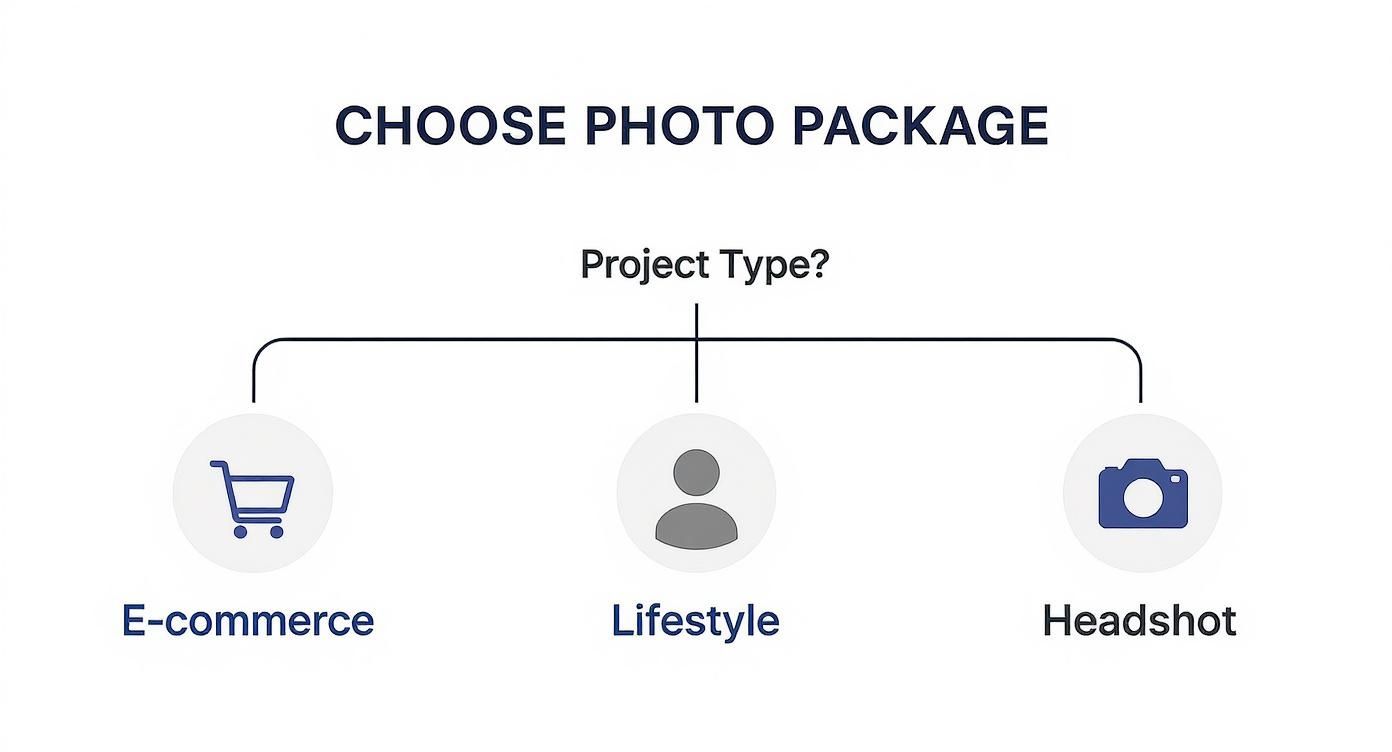
As the graphic shows, while big, creative projects are best left to a studio, the high-volume, repeatable work that fills a modern marketing calendar is a perfect job for automated solutions.
Which Photography Solution Fits Your Needs
To make the choice crystal clear, this table breaks down how each solution performs based on common project goals.
| Project Need | Best for Traditional Studio | Best for AI Photo Solution |
|---|---|---|
| Speed | Slower (Weeks to Months) | Extremely Fast (Minutes to Hours) |
| Cost | Higher (Day rates, crew, location) | Lower (Subscription or per-image) |
| Scale | Limited by shoot time | Virtually Unlimited |
| Creative Control | Full, hands-on artistic direction | High, but guided by prompts and styles |
| Use Case | Hero campaigns, human models | Product shots, social content, headshots |
Ultimately, you can see how these two options complement each other perfectly.
Think of it this way: use a traditional studio for your flagship campaigns that define your brand, and lean on AI for the high-volume, everyday content that keeps your brand top-of-mind.
As you explore this new world, understanding the details of AI integration in post-production can give you a better grasp of how deeply technology is reshaping creative workflows.
The smartest creatives today don't choose one over the other. They know when to use each one. To learn more about how this technology is changing the game, check out our complete guide on https://youraiphotographer.com/blog/ai-for-photography. By understanding both options, you can make smarter, more strategic decisions that elevate your brand’s visuals everywhere.
Seeing the Difference in Real-World Examples
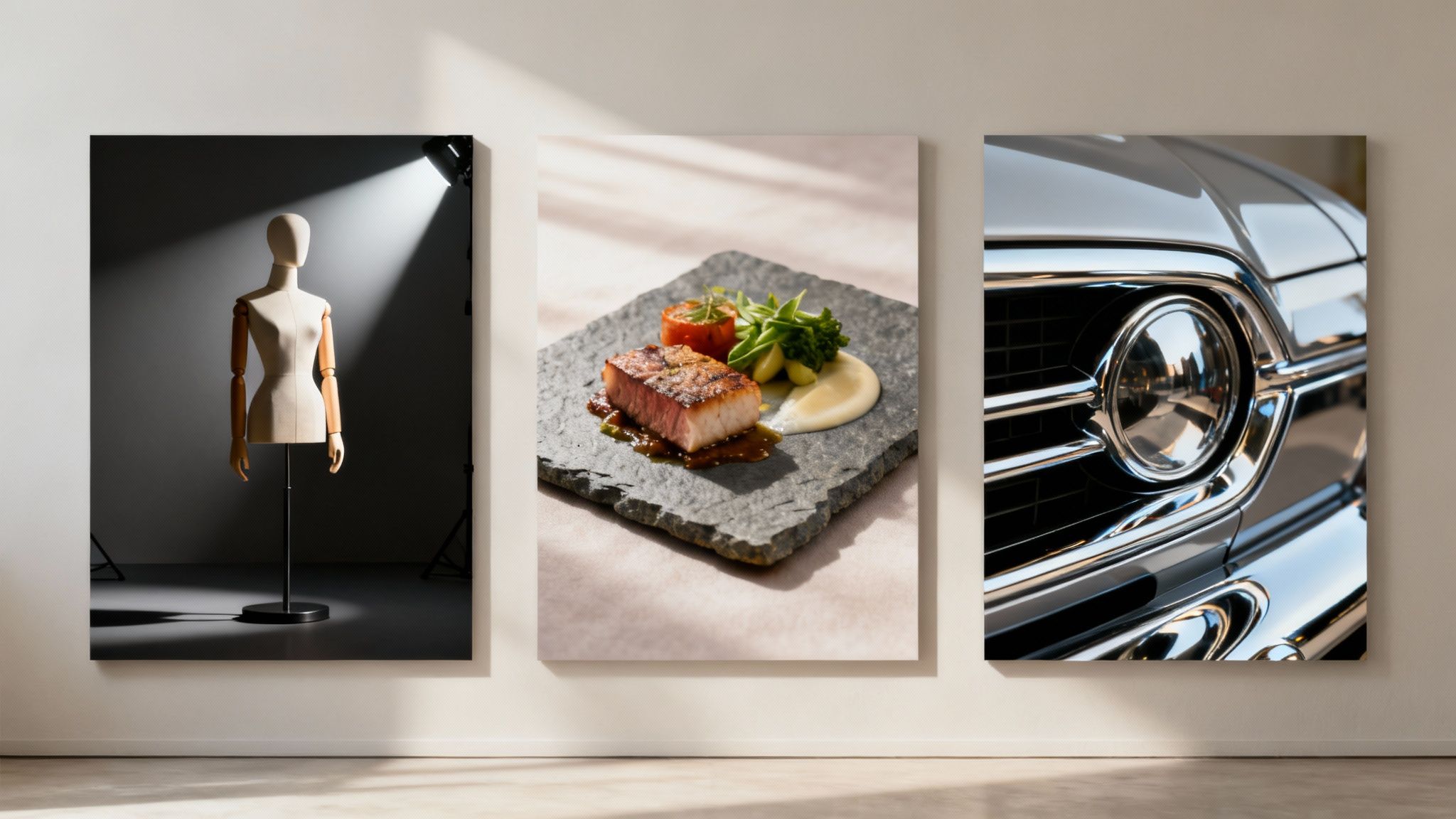
Checklists and theory are great, but nothing beats seeing the real thing. When a quality photo studio delivers an image, you're not just getting a snapshot. You're getting a story—one that’s been carefully built to make you feel something, see the value, and ultimately, take action.
Let's look at a few examples to really see how all those moving parts—the crew, the gear, the space—come together.
Think about a high-fashion shoot you’d see in a glossy magazine. The lighting carves out the model’s features perfectly, her pose is just right, and the dress hangs in a way that seems almost impossible. That doesn’t happen by chance. It’s the result of a photographer directing the entire scene, a stylist obsessing over every single fold of fabric, and a lighting technician managing a complex web of lights to create that one specific mood.
It’s a team effort, a kind of collaborative art that you simply can't fake. Every person in that room has a specific job, all working toward turning a concept into a single, powerful image.
The Art of Controlled Perfection
Now, picture a stunning shot of a gourmet burger. The cheese is melted just so, the sauce is dripping artfully, and every sesame seed on the bun seems to glisten. Nailing that shot is all about extreme control.
A food stylist probably spent hours using tweezers to place each ingredient, while the photographer tested different lighting angles to show off texture without making anything look greasy. The process is painstaking and requires:
- Specialized Lighting: Using softboxes and reflectors to make the lettuce look crisp while ensuring the bun doesn’t look dull or flat.
- Macro Lenses: Getting in close to capture those tiny, mouth-watering details that trigger an immediate craving.
- Precision Post-Production: Fine-tuning the colors to make them pop and removing any microscopic flaw that could distract the eye.
This isn't just snapping a photo of a burger; it's about building an experience. The goal is to make you feel the crunch and taste the flavor before you even take a bite—something only possible in a studio.
Capturing Automotive Power
Finally, let’s talk about a commercial photo of a new car. The paint looks like liquid metal, the body lines are defined by sleek highlights, and you don’t see a single unwanted reflection of the studio on its surface. This is one of the most technically difficult types of photography out there.
To get that shot, you need a massive, specialized studio with a cyclorama (or "infinity cove") and gigantic light banks hanging from the ceiling. The photographer and their crew will spend hours lighting the car, literally sculpting with light to emphasize its design. Every single reflection is planned, every shadow placed with intent. It’s that obsessive attention to detail that makes the car look powerful, fast, and something you absolutely need to own.
The demand for this kind of work is global, though different regions have their specialties. The Asia-Pacific region currently holds a 35% share of the photography market, largely thanks to its massive wedding industry and growing e-commerce needs. North America isn't far behind at 28%, focusing on high-end commercial and portrait work, while Western Europe’s 20% share is driven by its historic role as a fashion and advertising powerhouse. You can dive deeper into these photography industry statistics to get the full picture.
What do all these markets have in common? They all depend on quality photo studios to create the stunning images that fuel their industries.
Getting Studio-Grade Images with AI Today
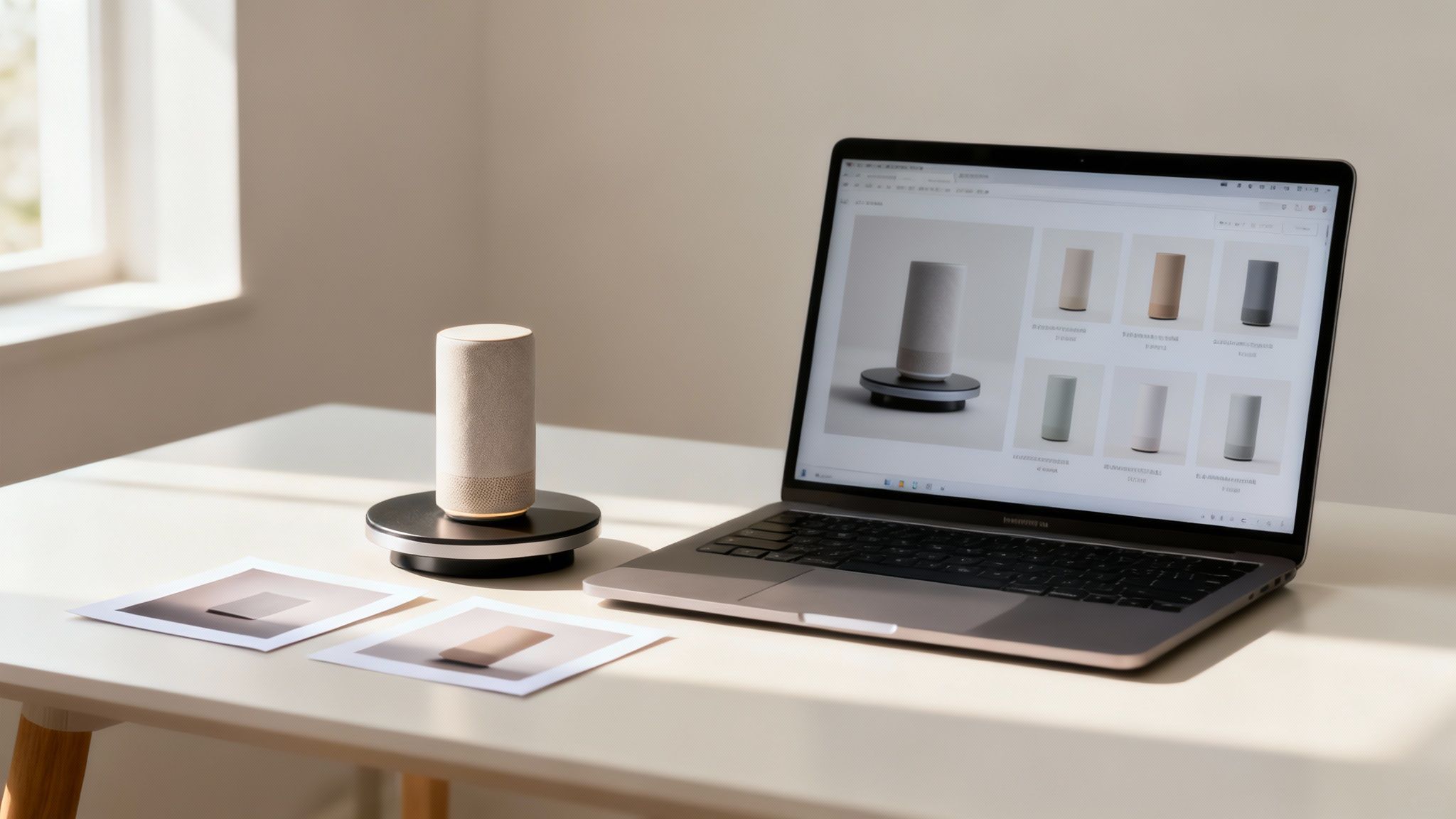
It’s one thing to know what makes a great photo studio, but what if you could get those same fantastic results without ever leaving your desk? Modern AI tools now offer a powerful and surprisingly simple way to create studio-grade images, letting you skip the classic hassles of scheduling, finding a location, and footing a hefty bill.
Think of these tools as your personal, on-demand photo studio. Instead of booking a physical space, you just feed it a handful of your existing photos. The AI learns what your subject or product looks like and can then produce brand-new, photorealistic images in any style or setting you can dream up.
How AI Delivers Professional Quality
The real magic of AI isn't just about convenience. It’s the powerful combination of speed, scale, and consistency it offers. You can create hundreds of unique images in minutes, and every single one will meet the exact same quality standard. This is a total game-changer for anyone who needs a steady supply of fresh visual content.
Key benefits include:
- Incredible Speed: Go from an idea to a finished image in seconds, not weeks.
- Cost-Effectiveness: Say goodbye to studio rental fees, crew hires, and expensive equipment costs.
- Massive Scalability: Generate thousands of images for different campaigns or platforms without ever needing a reshoot.
While some traditional studios are starting to offer services like AI-edited headshots, platforms like YourAIPhotographer put that creative power directly into your hands.
Your First AI Photoshoot in Three Steps
Getting started is refreshingly straightforward. You don’t need to be a tech wizard—you just need a clear idea of the kind of photo you want. The whole process is designed so that anyone can produce professional-looking visuals.
Here’s how simple it is:
- Upload Your Photos: Start by uploading 10-20 pictures of your subject or product. This teaches the AI what to work with.
- Select a Style: Pick from pre-made styles like "Professional Headshots" or "E-commerce" to instantly set the right tone.
- Generate Images: With one click, the AI gets to work, creating a whole batch of high-resolution, studio-quality images ready for you to use.
This approach is perfect for creating a large volume of consistent images, like corporate headshots for your entire team or product photos for a full e-commerce catalog. It gives you the polish of a photo studio with the efficiency of modern tech.
And it’s not just for products. You can check out the https://youraiphotographer.com/blog/best-ai-portrait-generator to create stunning, professional-grade images of people for just about any purpose. By jumping in and trying these tools, you can start creating the kind of visuals that truly make your brand stand out.
A Few Common Questions
Diving into professional photography can feel a little overwhelming. You've got questions about traditional shoots, you're curious about new tech, and you want to make sure you get it right. Let's clear up a few of the most common things people ask.
Getting these basics down will help you feel much more confident, whether you're booking a studio or trying out an AI tool.
How Should I Prepare for a Professional Photoshoot?
The secret to a great, hassle-free photoshoot? It all happens before you ever step foot in the studio. A good crew will guide you, of course, but showing up prepared is what turns a good shoot into a great one.
Think of it in three simple steps:
- Build a Mood Board: This is your visual North Star. Pull together images, colors, and styles that nail the vibe you're after. A solid mood board is the best way to get what’s in your head into the photographer’s camera.
- Get Your Products or Wardrobe Ready: Make sure everything you plan to shoot is pristine—clean, pressed, and organized. If you’re shooting products, it's always a smart move to bring backups, just in case.
- Write a Detailed Shot List: Don't leave it to chance. Create a checklist of every single shot you absolutely need. Be specific about the angles, backgrounds, and compositions. This ensures you walk away with everything you came for.
What’s the Difference Between Licensing and a Buyout?
This is a big one, and getting it wrong can cause major headaches down the road. Licensing and a buyout are all about who can use the photos and how.
A license is like renting the photo. It gives you permission to use it for a specific purpose, in a specific place, for a specific amount of time (like on your website for one year). A full buyout means you own the photo outright, forever, no restrictions. It costs a lot more, but the image is yours to do with as you please.
Can AI Photography Create Images with People?
Absolutely. Modern AI tools are surprisingly good at generating realistic photos with human models. This is a game-changer for creating things like social media ads or website content where you need a variety of looks without the expense and hassle of hiring models.
But it’s not always the right tool for the job. If you need to photograph a specific person—say, your company's CEO—or capture a very particular, authentic emotion, nothing beats a real photoshoot in a quality photo studio. That human touch is still king for certain campaigns.
Ready to create stunning, studio-grade images without the studio? YourAIPhotographer puts the power of professional photography right at your fingertips. Generate photorealistic headshots, product photos, and lifestyle images in minutes. Start creating for free today at youraiphotographer.com.