

What Is Lifestyle Photography A Guide to Capturing Authentic Moments
Discover what is lifestyle photography and how it captures the beauty of real life. Learn pro tips for telling authentic stories through your photos.
Table of Contents
At its heart, lifestyle photography is all about capturing real life in a beautiful, artistic way. It’s that sweet spot right between a formal, posed studio portrait and a completely fly-on-the-wall documentary shot. Think of it as telling a genuine story, just with a little professional guidance to make it shine.
Capturing Life Beautifully
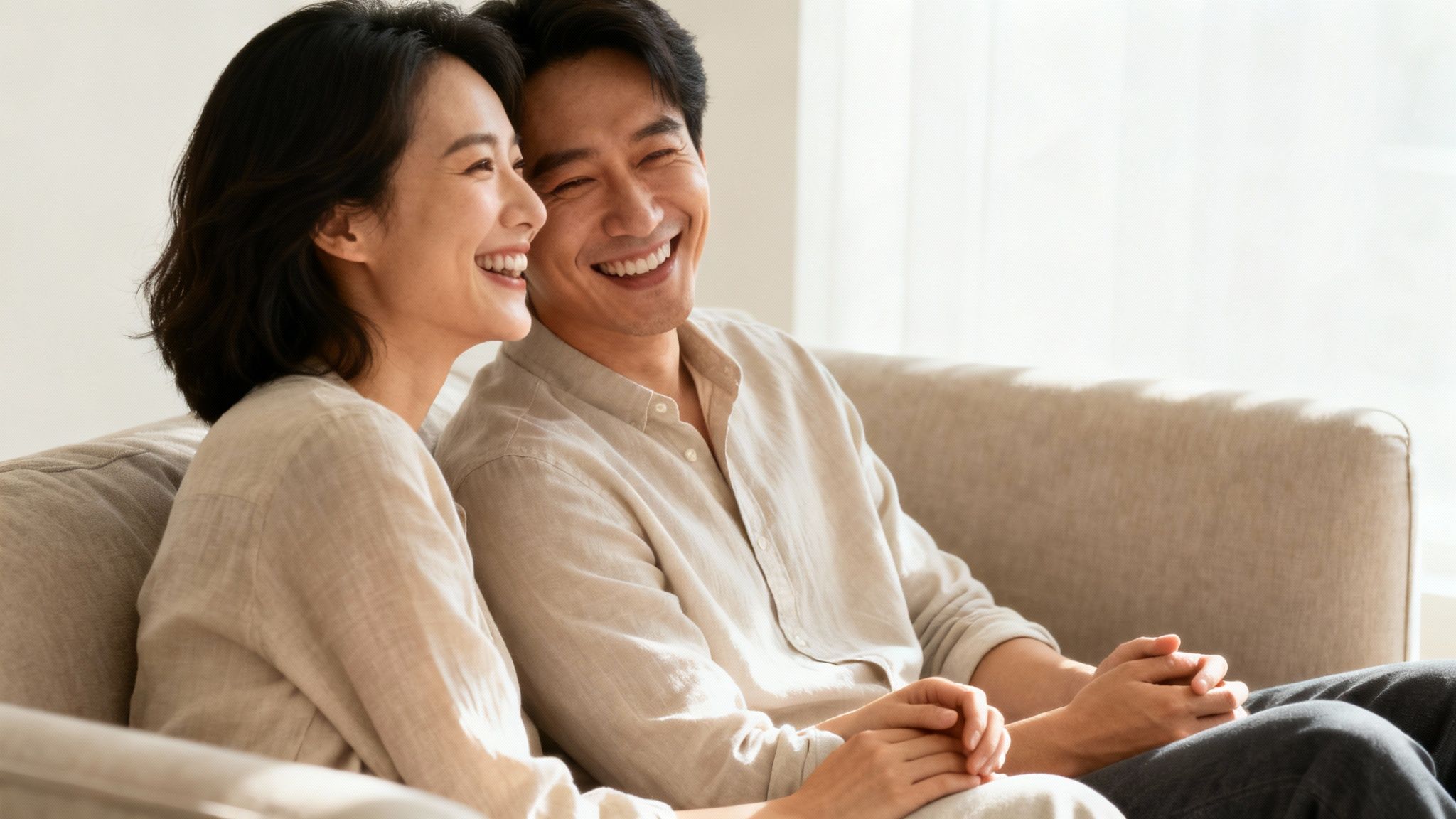
So what does that actually look like during a shoot? Let’s imagine a family baking cookies together.
A traditional portrait photographer might have everyone line up, perfectly clean, and smile directly at the camera. On the other hand, a documentary photographer would simply capture the messy, flour-dusted chaos as it unfolds, without saying a word.
The lifestyle photographer finds the magic in the middle. They might suggest the parents tickle their child or ask a sibling to whisper a secret, all to get a real, honest-to-goodness laugh. The idea is to guide people into natural interactions, not force them into stiff poses. This way, the final images feel both authentic and beautifully composed.
To get a better handle on the key elements, this quick table breaks down the core of lifestyle photography.
Lifestyle Photography at a Glance
| Core Principle | What It Means in Practice |
|---|---|
| Authentic Emotion | The goal is to capture genuine smiles, laughter, and connections, not forced poses. |
| Guided Interaction | The photographer uses prompts and directions to encourage natural moments. |
| Real-Life Setting | Shoots happen in meaningful locations, like a family's home or a favorite park. |
| Storytelling Focus | Each photo contributes to a larger narrative about the subjects and their relationships. |
Essentially, the photographer acts more like a director than a puppeteer, setting the stage for real moments to happen organically.
The Art of Prompting, Not Posing
The real secret sauce in lifestyle photography is skillful guidance. Instead of telling people exactly where to put their hands or how to smile, photographers use prompts—little suggestions or activities—to bring out natural reactions. It’s what makes the photos feel so alive.
Rather than a generic "everyone say cheese," a photographer might try things like:
"Whisper your favorite thing about the person next to you."
"Okay, on the count of three, everyone make their silliest face."
"Tell me the story of the day you two first met."
These simple prompts transform a photoshoot from a stuffy obligation into a fun experience. It allows personalities to come out and helps create images that tell a much deeper story. This focus on genuine moments is a big reason the approach is so popular in the $20.6 billion global portrait photography market.
The essence of lifestyle photography is to document life as it is, but to do so with an artistic eye. It’s about creating images that feel both real and beautiful, capturing the spirit of a moment, not just the appearance of the people in it.
Understanding this genre is all about appreciating its focus on genuine expression. It borrows heavily from the core ideas of visual storytelling examples to build a narrative that truly connects with the viewer. When you start exploring different photography styles, you can really see what makes this approach stand out.
Exploring Different Types of Lifestyle Photography
Lifestyle photography isn't one-size-fits-all. Think of it less as a rigid category and more as a flexible approach to telling different kinds of stories. The secret sauce is always the same: capturing authentic, guided moments. But you can apply that recipe to almost any subject, which is why it’s become such a go-to style.
What makes it so effective is its ability to move beyond a simple snapshot. It’s all about revealing the emotion and connection happening in a specific moment, whether that’s the beautiful chaos of family life or the quiet focus of an entrepreneur at work.
Let’s break down how this storytelling philosophy looks in a few common scenarios.
Family and Newborn Sessions
This is where many people first encounter lifestyle photography. Forget the stiff, matching-outfit studio portraits of the past. A family lifestyle session is about capturing life as it really happens—maybe it’s a lazy Sunday morning making pancakes, a rowdy board game night, or just reading a book together on the couch. The goal is to document the little, everyday interactions that truly define a family's bond.
Newborn sessions follow the same principle. Instead of complicated, prop-heavy poses, the focus shifts to the quiet, tender moments between the baby and their parents at home. Think cuddling in the nursery, a gentle bath, or a peaceful nap on a parent's chest.
The beauty here is that you're freezing a moment in time that feels real. The final images don't just show what a family looked like; they show what their life felt like.
These sessions are all about creating a visual diary of genuine connection.
Personal Branding and Commercial Work
Lifestyle photography is a huge piece of the puzzle for modern personal branding. For entrepreneurs, coaches, and creators, it’s the key to building an image that feels relatable and trustworthy. The photos show them in their element—working at a favorite coffee shop, brainstorming with a client, or even enjoying a hobby that reveals a bit of their personality.
These images tell a story about who they are and what it’s like to work with them, which is far more powerful than a sterile corporate headshot. It creates a real connection by showing the person behind the profession.
For commercial brands, lifestyle photos put products into realistic, aspirational contexts. A clothing company might show friends laughing at a picnic, helping customers imagine themselves feeling that same joy while wearing their jeans. You aren't just selling a product; you're selling a feeling. If you're looking for inspiration, you can find many compelling luxury lifestyle photoshoot ideas that really nail this aspirational vibe.
Couples and Engagements
When it comes to couples, lifestyle photography is perfect for capturing their unique dynamic in a way that feels natural and unforced. An engagement session could take place at the spot where they had their first date or a park where they always walk their dog.
Instead of just telling them to "smile," a photographer might prompt them with fun activities—like whispering a secret or slow dancing to a favorite song—to bring out genuine smiles and affectionate glances. It’s less about the perfect pose and more about capturing the energy between two people. The final photos become a beautiful and deeply personal reflection of their story so far.
Lifestyle vs. Portrait and Editorial Photography
To really get a handle on what lifestyle photography is, it helps to see it next to its close cousins: traditional portrait and editorial photography. While all three focus on people, they each have a completely different mission.
Think about it this way: you need a photo for your annual holiday card. A traditional portrait photographer would probably bring you into a studio, meticulously pose your family, and make sure everyone is looking at the camera with a perfect smile. The end game is a polished, classic shot.
Now, a lifestyle photographer would take a totally different route. They might suggest you all bake cookies together in your kitchen, capturing the real laughter, the messy hands, and the genuine moments that happen along the way. The goal here isn't perfection; it's bottling up the feeling of your family's connection.
Distinguishing Key Differences
Editorial photography is another beast entirely. If a magazine wanted to feature your family's holiday baking, the photographer would art-direct the entire scene. They would choose the outfits, the specific props, and the lighting to build a highly stylized, almost cinematic narrative. It’s less about capturing a moment and more about creating one to tell a specific story.
A portrait shows what you look like. A lifestyle photo shows who you are. An editorial photo shows a story you've been cast in.
This is why lifestyle photography feels so relatable. It often revolves around common themes that resonate with all of us.
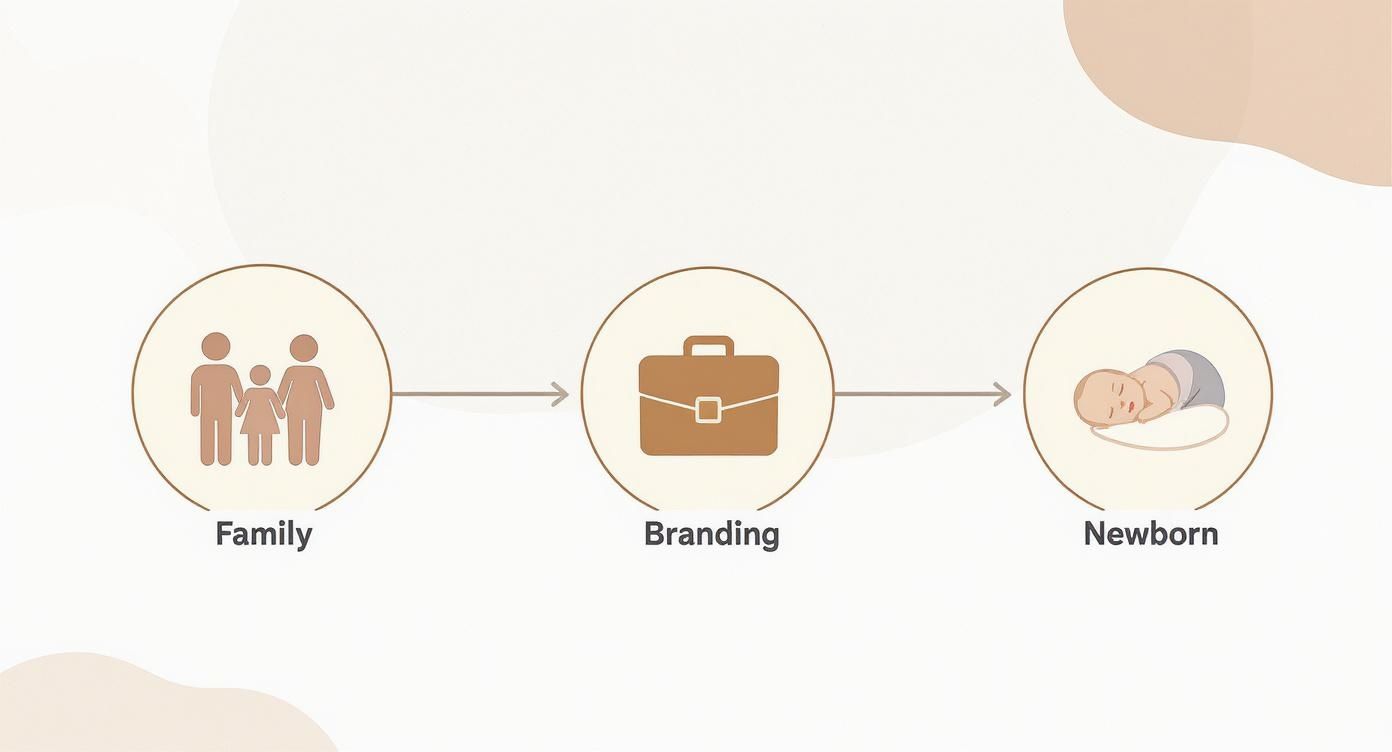
As you can see, the lifestyle approach is incredibly flexible, making it perfect for telling stories about family life, professional branding, or huge personal milestones like a new baby.
Comparing Photography Styles
To make these differences crystal clear, let's break them down side-by-side. This table really helps clarify where each style shines.
| Attribute | Lifestyle Photography | Traditional Portrait | Editorial Photography |
|---|---|---|---|
| Goal | Capture authentic emotion and connection. | Create a polished, posed image. | Tell a specific, stylized story. |
| Direction | Gentle prompts and guided activities. | Direct posing and strict instructions. | Highly art-directed and conceptual. |
| Environment | Real-life settings (home, park). | Often a studio or controlled location. | Curated locations that fit a theme. |
| Focus | Interaction between subjects. | Subject's direct gaze to the camera. | The overall narrative or concept. |
Knowing these distinctions helps you pick the right tool for the job, ensuring the final images match what you had in mind.
Choosing the Right Style
Of course, the lines between these styles can and do blur. A photographer might bring lifestyle techniques into a studio shoot, or a formal portrait could have a few candid, unposed moments. If you're looking to spice things up, checking out some creative portrait photography ideas can inject that unique, personal feel you’re after.
Ultimately, the best style depends on what you want to achieve. For that timeless, everyone-looking-their-best photo for the mantelpiece, a traditional portrait is a surefire win. If you want to freeze a real, emotional moment in time, go with lifestyle. And if you’re building a high-concept story for a magazine or brand, editorial gives you the creative control you need.
Essential Techniques for Natural Photos
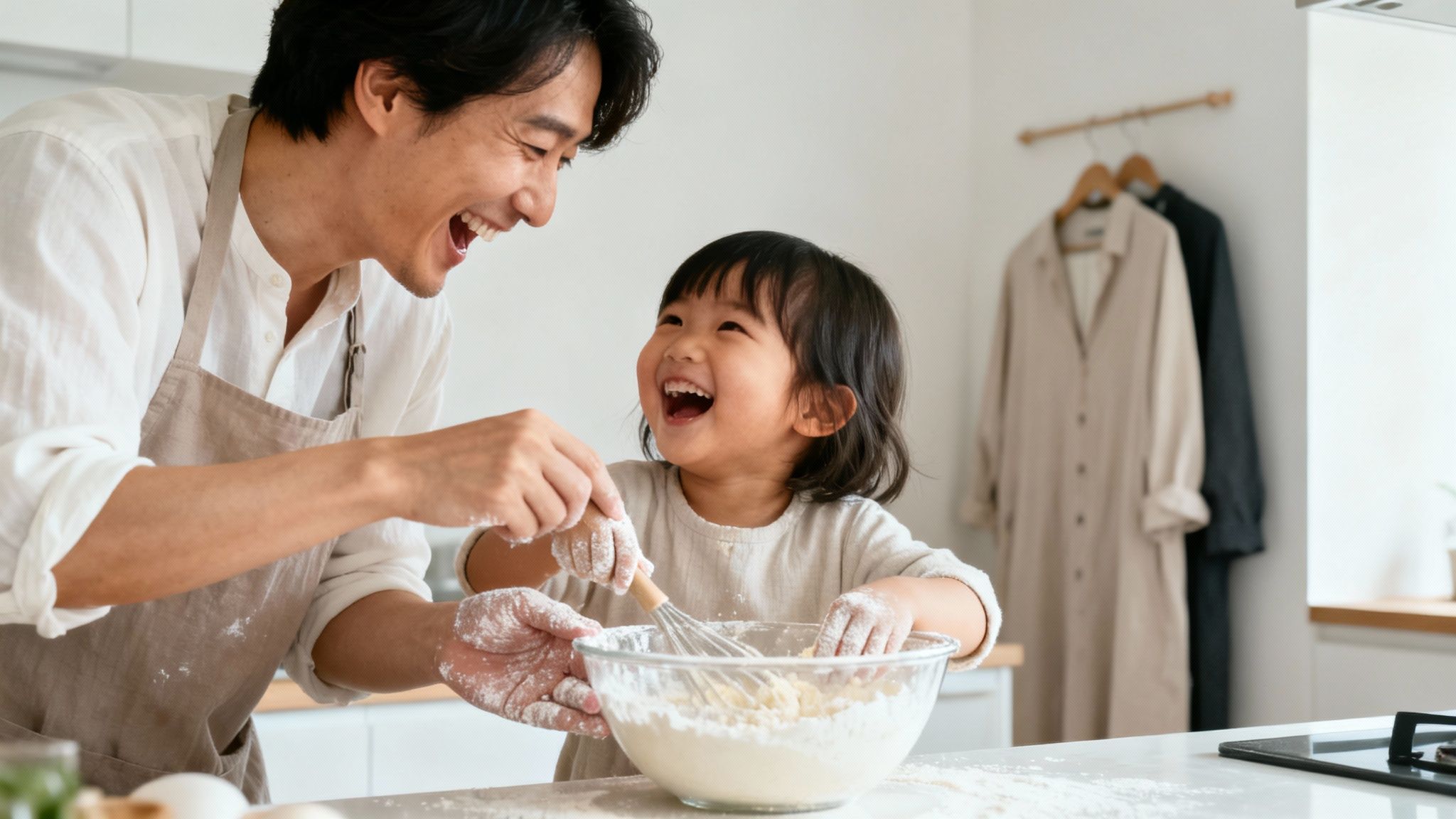
Anyone can point a camera, but getting photos that feel truly natural? That's a different skill altogether. It's less about gear and more about turning a photoshoot into a real experience where authentic moments can actually happen.
The secret is setting a stage where people forget they're being photographed. It all starts before you even pick up the camera—by creating an atmosphere of comfort and fun where every detail, from the location to the clothing, helps tell the story instead of getting in the way.
Setting the Scene for Authenticity
The right environment is everything. When people are in a place that feels familiar and meaningful, like their own home or a favorite local park, their guard comes down almost instantly. It's in these comfortable backdrops that real life happens.
Wardrobe is another big piece of the puzzle. Forget perfectly matched, stiff outfits. Think coordinated colors that look great together but still let individual personalities shine through. Comfort is non-negotiable; you want people to be able to move, laugh, and interact without feeling like they're trapped in their clothes.
This demand for genuine, relatable imagery is what’s fueling much of the growth in professional photography. In the United States, the photography industry is valued at an estimated $15.8 billion as of 2025, with a 5.8% compound annual growth rate over the past five years. It's clear that authentic styles like lifestyle photography aren't just a trend; they're a major economic force. You can find more photography industry trends on ibisworld.com.
The Power of Prompting Over Posing
If there’s one technique that will completely change your lifestyle photos, it's prompting over posing. Posing gives you static, often awkward pictures. Prompting, on the other hand, sparks genuine, dynamic reactions. It's the difference between forcing a "Cheese!" and asking, "Tell me the story of your most disastrous date night." One is a command; the other is an invitation.
A prompt is a small invitation to interact, a catalyst for genuine emotion. It turns the photographer into a director of moments rather than a micromanager of poses, allowing for beautiful, unscripted results.
This approach makes the entire session feel less like a stuffy photoshoot and more like a fun, collaborative activity. And that’s exactly the vibe you’re going for.
Here are a few simple prompts that work wonders:
For Couples: "Whisper three things you love about your partner into their ear." This one is gold for getting real smiles and tender moments.
For Families with Kids: "Okay, everyone huddle up! On the count of three, I want you to give dad the biggest group hug you possibly can!" This creates instant energy, movement, and joyful chaos.
For Individuals: "Think about a goal you're really proud of achieving. What did that feel like?" This simple question encourages a moment of genuine, reflective expression.
By guiding with prompts, you stop just taking pictures of people and start capturing the essence of their relationships and personalities. To dig deeper into creating images that connect, take a look at our guide on how to take aesthetic pictures.
Why Lifestyle Photography Matters Today
In a world drowning in digital noise, lifestyle photography’s ability to capture something real has never been more valuable. We're constantly bombarded with images, and with the rise of AI tools for stock images, it's getting harder to tell what's genuine. This is precisely why lifestyle photography works. It’s not just a trend; it's a powerful way to connect with people in a crowded visual world.
At its core, the demand is for authenticity. People are simply over the overly polished, soulless ads of the past. They crave content that feels relatable and human. That's where lifestyle photography shines, making it an essential tool for personal branding, modern marketing, and of course, social media. It cuts through the static by telling a real story.
Building Trust Through Personal Branding
For any professional—be it a consultant, artist, or entrepreneur—lifestyle photography is how you build a genuine personal brand. A stiff corporate headshot shows your face, but a great lifestyle shot shows your personality. It might be you hammering out ideas in your favorite coffee shop or simply taking a moment to unwind.
These kinds of images build an immediate sense of trust and connection. They give your audience a peek behind the curtain, letting them see the person behind the business. This makes you far more approachable and memorable. It’s visual storytelling that helps potential clients feel like they know you before they’ve even met.
Lifestyle photography transforms a personal brand from a simple resume into a compelling narrative. It invites people into your world, showing your passion and expertise in a way that words alone cannot.
Dominating Social Media Engagement
Just take a scroll through your favorite social media feed. What do you see? Lifestyle photography is everywhere, especially on visually driven platforms like Instagram and Pinterest. The whole game is about sharing content that's aspirational but still feels grounded and real.
It all comes down to emotional connection. When someone sees a photo that reflects their own life or dreams, they're infinitely more likely to hit that like button, leave a comment, or share it. If you want to create images that truly pop, our guide to social media visual content has some great pointers.
The numbers back this up, too. The global photography services market, where lifestyle work is a huge component, was valued at $55.6 billion in 2023 and is expected to hit $81.83 billion by 2032. This isn't a fluke; it shows a massive, ongoing demand for authentic, professional images.
Fueling Modern Marketing and Advertising
Brands have caught on in a big way. They’ve realized it's much more effective to show the experience a product creates rather than just the product itself. Think of a skincare brand. Instead of a sterile product shot, they show someone enjoying a peaceful self-care routine at home. They’re not just selling lotion; they're selling tranquility.
This approach makes it easy for customers to imagine the product in their own lives, which makes it far more appealing. By focusing on the "why"—the lifestyle a product unlocks—brands build much deeper connections and turn one-time buyers into loyal fans.
Your Lifestyle Photography Questions, Answered
Alright, so you're sold on the idea of lifestyle photography. But when it comes time to actually plan a shoot, the practical questions start popping up. Whether you're the one stepping in front of the camera or the one holding it, getting these details sorted out beforehand makes everything smoother and way more fun.
Let's clear up some of the most common questions so you can walk into your next shoot feeling totally prepared.
What Should I Wear for a Lifestyle Photoshoot?
The golden rule here is to be comfortable and be yourself. Pick clothes that you actually love and can move around in. You're going to be playing, walking, and interacting, not standing still like a statue.
Instead of trying to make everyone match perfectly, think in terms of coordination. Pick a simple color palette—maybe two or three main colors—and let everyone find pieces that fit within it. This looks much more natural and less like a store catalog from the 90s.
A couple of things to steer clear of? Big, loud logos, super busy patterns, and anything neon. They just pull focus from the real story: you. And always consider your setting. Layers are your best friend; they add texture and visual interest, and you can always shed one if you get warm.
Think of your outfits as supporting actors. They should complement the story of your family or brand, not steal the spotlight. When you feel good in what you're wearing, it absolutely shows in the final photos.
How Is This Different From a Standard Portrait Session?
It all comes down to connection over perfection. Think of a traditional portrait session: the main goal is usually that one perfect shot where everyone is looking at the camera, smiling just right. It's posed and directed.
A lifestyle session flips that script. It’s all about capturing the beautiful, messy, authentic interactions between people.
The photographer acts more like a director of a scene than a commander of a pose. They'll give you prompts and things to do—"tell your partner what you love most about them," or "let's see who can tickle Mom first." This creates an environment for real emotions and personalities to come out and play. You end up with photos that tell the story of who you are, not just what you look like.
Can Lifestyle Photography Be Done in a Studio?
You bet it can. While we often picture lifestyle shoots in a cozy home or a sun-drenched field, a studio can work just as well. The key is to make the studio feel less like a sterile white box and more like a lived-in space.
This is where props and styling come in. A comfy couch, a simple bed setup with rumpled linens, or even just lighting that beautifully mimics soft, natural window light can do the trick. The goal remains exactly the same: guide people through activities that bring out genuine connection.
The setting might be more controlled, but the mission to capture authentic moments is unchanged. It’s all about creating a space where people can relax and simply be themselves.
Need stunning, on-brand lifestyle photos without the hassle of a traditional shoot? YourAIPhotographer lets you generate unlimited, photorealistic images from just a few selfies. Create professional headshots, social media content, and product photos in seconds. Get your AI-generated photos today.